

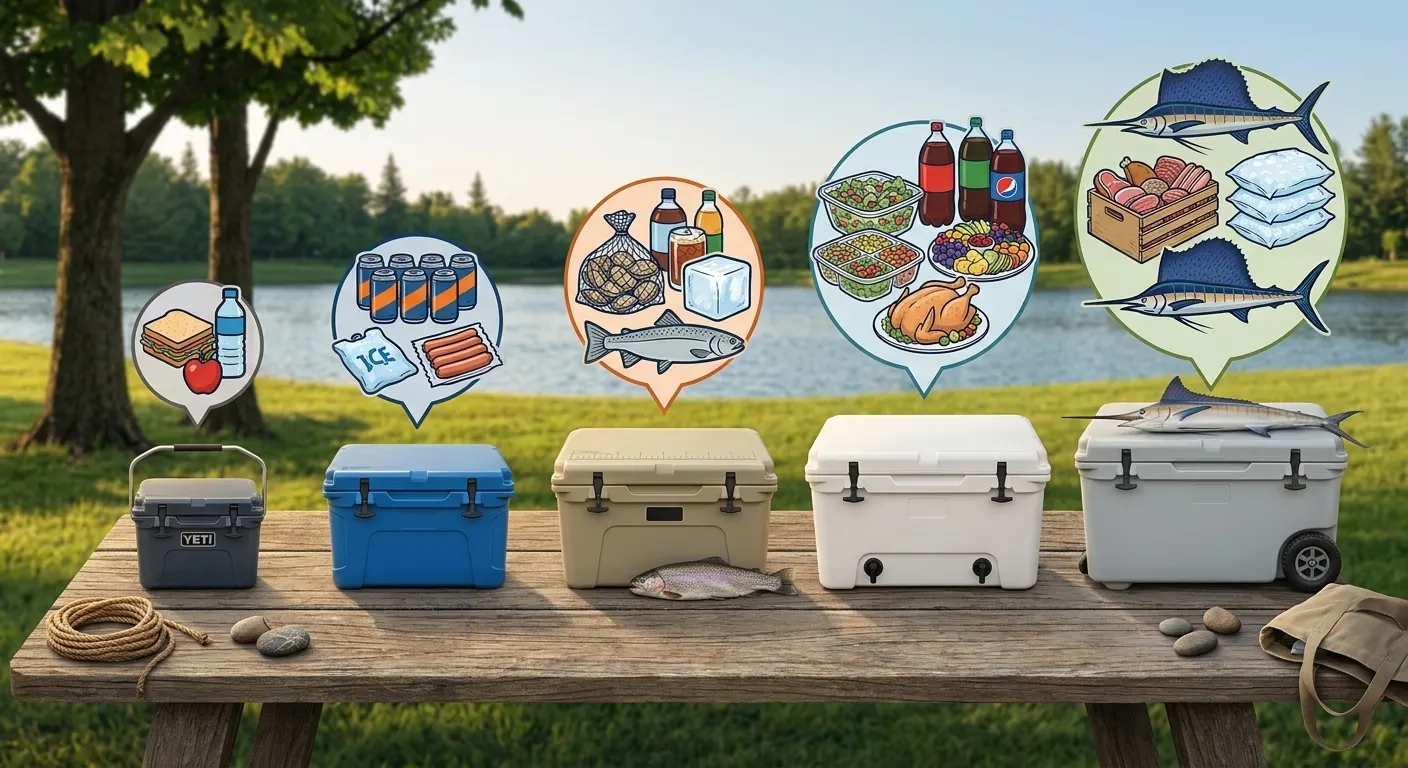
Most people choose a cooler based on price or brand, and size is often overlooked.
This can end up costing you twice: first, if the cooler is too small and your food warms up by the second day, and again if it’s too big to carry, doesn’t fit in your truck bed, or is just too much for a solo fishing trip.
A cooler that fits your needs keeps ice longer, since a full cooler stays cold better than one that’s half empty.
Air gaps make ice melt faster.
So, picking the right size isn’t just about space; it affects how well your cooler works.
Texas game wardens and Montana hunting guides agree on one thing: buy a cooler for your biggest trip, not your usual one.
If your cooler is big enough for deer season, it will work for all your shorter trips too. The opposite doesn’t work.
Understanding Cooler Capacity (Quarts vs. Liters vs. Cans)
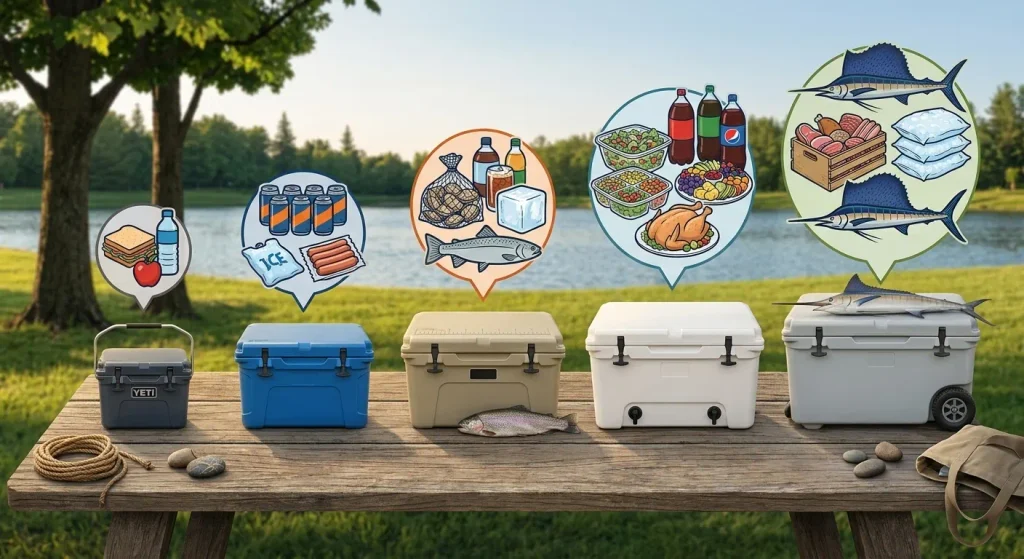
Cooler capacity is shown in three ways, but none of them gives you the complete picture on its own.
In the US, quarts are the standard unit of measurement, a tradition dating back to old Coleman and Igloo catalogs from the 1950s.
One quart is about 0.95 liters, so a 50-quart cooler holds around 47 liters.
Liters are more common on premium and international brands and on coolers sold in Canada or Europe.
If both quarts and liters are listed, the liter value is usually more accurate because quart conversions are often rounded for marketing purposes.
Brands like to advertise cooler size by how many cans it holds, but this is the least reliable measure.
A ’48-can cooler’ means 12-ounce cans packed tightly with no ice or gaps.
Once you add ice, it really holds about 24 to 30 cans.
Think of can counts as the best-case scenario, not what you’ll actually get.
Interior vs. Exterior Dimensions (Why the Number on the Box Isn’t the Whole Story)
The quart rating shows how much the cooler holds, but it doesn’t tell you if it will fit in your truck bed, boat hatch, or the back seat of your UTV.
Rotomolded coolers have thick insulation, usually 2 to 3 inches thick. This means a 65-quart rotomolded cooler can be as big on the outside as a 100-quart soft-sided or thin-wall cooler.
Two coolers with the same quart rating can differ by six inches or more in length, depending on wall thickness and shape.
Before you buy, measure the space where your cooler will go.
The width behind your truck’s wheel wells, boat hatch openings, and your car trunk all have limits that quart numbers don’t show.
Always check the cooler’s exterior dimensions and measure your space with a tape measure before ordering.
The Ice-to-Content Ratio Nobody Tells You About
Here’s something brands don’t mention: a 50-quart cooler doesn’t hold 50 quarts of food and drinks.
That’s the total space, and ice takes up a lot of it.
For a weekend trip, use a 2:1 ice-to-food ratio.
Pack two quarts of ice for every quart of food and drinks.
For a day trip in mild weather, a 1:1 ratio is fine. For longer trips to hot places like Arizona or Florida, aim for a 3:1 ratio.
So, don’t just size your cooler for your food and drinks.
Include twice as much space for ice. A cooler that seems too big at first is often just right once you add the ice.
Cooler Size Chart by Group Size & Trip Length
| Group Size | Day Trip | Weekend Trip | Week-Long Trip |
| 1-2 People | 16-25 qt | 25-35 qt | 45-55 qt |
| Family of 4 | 25-35 qt | 45-55 qt | 65-75 qt |
| Groups of 6+ | 45-55 qt | 65-85 qt | 100-150 qt |
1-2 People / Day Trips
A 16 to 25-quart cooler is enough for lunch, some drinks, and maybe a small catch on a solo fishing trip. This size fits easily in a car trunk or on a kayak.
Yeti’s Roadie 24 and similar coolers are popular in this range because they’re perfect for single-day use.
Family of 4 / Weekend Trips
A 45 to 55-quart cooler can hold two days of meals, snacks, and drinks for a family, and it’s still easy to carry. This size is the top seller for most brands because it fits the most common trips, like weekend camping or a day at the lake.
Groups of 6+ / Week-Long Trips
If you need to feed six or more people for a week, or store ice for a hunting camp, you’ll need a cooler over 100 quarts. These coolers are heavy, often 30 to 40 pounds empty. At this size, wheels or a two-person handle are a must.
Sizing for Specific Uses (Fishing Catch, Meat Hauls, Beverages)
Different trips need different cooler sizes, even if your group size stays the same.
- Fishing catch: Choose a cooler based on your maximum allowed catch, not your usual day. For example, Alaska allows large salmon limits during peak season, so you’ll need more space than if you’re fishing a catch-and-release stream in Colorado. Always check your state’s daily and possession limits before choosing a cooler, since a big catch can fill it quickly.
- Meat hauls: Hunters in states like Wisconsin and Michigan often need 100 to 150 quarts to carry a full field-dressed deer with ice. Bone-in quarters take up more space than boned meat, so think about how you’ll process the animal before buying a cooler.
- Beverages: A cooler just for drinks at a tailgate or party can be smaller than you might think, since cans stack more tightly than food. A 45-quart cooler with cans and ice can serve 20 to 25 people for an afternoon.
Common Sizing Mistakes to Avoid
Don’t buy a cooler based only on the can count. As mentioned earlier, can counts don’t include ice. Use quart capacity and the ice ratio instead.
1. Don’t forget about weight
A full 65-quart rotomolded cooler with ice and food can weigh over 100 pounds, which usually takes two people to lift. If you camp alone or need to carry your cooler over rough ground, a smaller cooler you can handle is better than a big one you can’t move.
2. Don’t size your cooler for your average trip
Buy one that’s big enough for deer season, a week at the lake, or your biggest group cookout. A large cooler works for small trips, but a small cooler won’t work for big ones.
3. Don’t forget to measure your vehicle
A cooler that fits on the store shelf might not fit in your truck bed or trunk. Always measure first.
FAQ: Cooler Sizing Questions
Does a bigger cooler keep ice longer than a smaller one?
Yes, usually. A bigger cooler with more insulation and less air compared to ice will keep ice longer, but only if it’s packed full. If a large cooler is only half full of ice, it actually warms up faster than a smaller, fully packed one.
How many quarts do I need for a 3-day camping trip for two people?
For two people on a three-day camping trip, plan on a 35 to 45-quart cooler, using the 2:1 ice-to-food ratio.
What size cooler fits a full deer?
Most hunters need a 100 to 150-quart cooler to carry a full field-dressed deer, depending on whether the meat is boned or left bone-in.
Is it better to size up or size down when I’m unsure?
Go bigger if you’re unsure. A cooler that’s too big just takes up extra space, but one that’s too small can spoil your food and ruin your trip.
Final Takeaway
Choosing the right cooler size depends on three things:
- Your group size,
- How long is your trip, and
- How much ice will you need with your food?
Ignore the can count on the box and use the chart above to start. Measure your vehicle before buying, and if you can’t decide between two sizes, pick the bigger one.
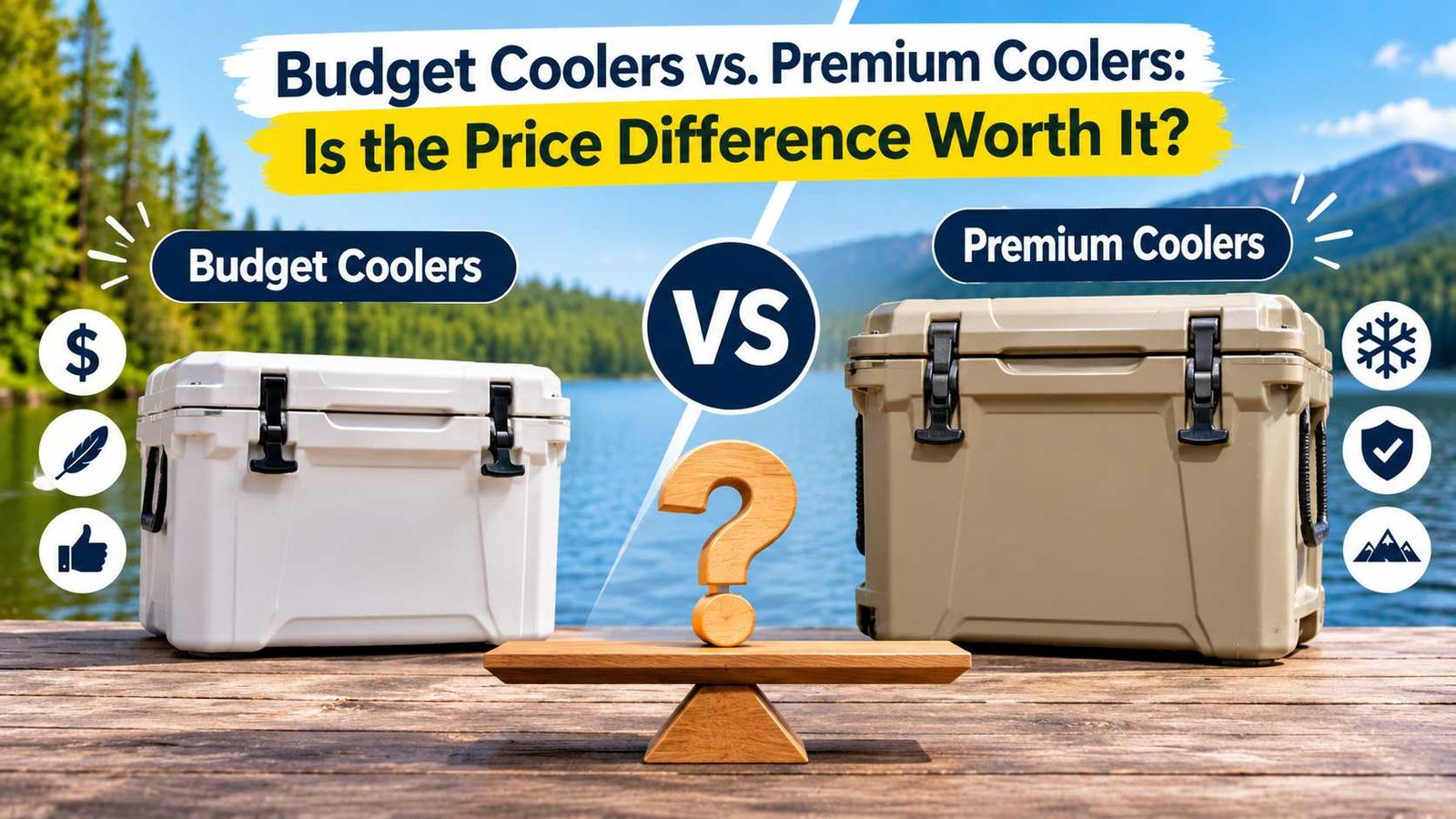


Insulation testing, rotomolded coolers routinely kept food safely cold for 5 to 7 days, while traditional coolers of similar size dropped below the safe 40-degree mark in 4 days
Your cooler meets Disney’s cooler size requirements and you stick to the rules about what you pack, you’ll be all
It’s like you read my thoughts! You seem to understand a lot approximatepy this, like you wrote the book in it or something. An excellent read. I will defintely be back.