

Ice retention is the time a cooler keeps ice solid, or keeps food cold. It is the spec I check first, and the spec I trust the least. A maker claim is a best-case number from a cool room, with the lid shut, with no food to cool. My trip is not a cool room.
What Ice Retention Means
Ice retention has two measures. One is the time until the ice melts. The other is the time until the food warms past 40 degrees F. The two numbers are not the same. Ice can still sit in the box after the food warms past the safe line. I plan around the food staying cold, not around the last cube melting.
Food must stay at or below 40 degrees F. That is the line the food safety rules set. I check the food with a small thermometer when I am unsure. I throw out food that has sat above 40 degrees F for more than 2 hours.
Lab Tests vs Maker Claims
A lab test gives a fair read. A test crew fills the cooler with a set amount of ice, shuts the lid, and checks it on a set schedule in a set room. The numbers below come from lab tests and from the site’s own ice tests.
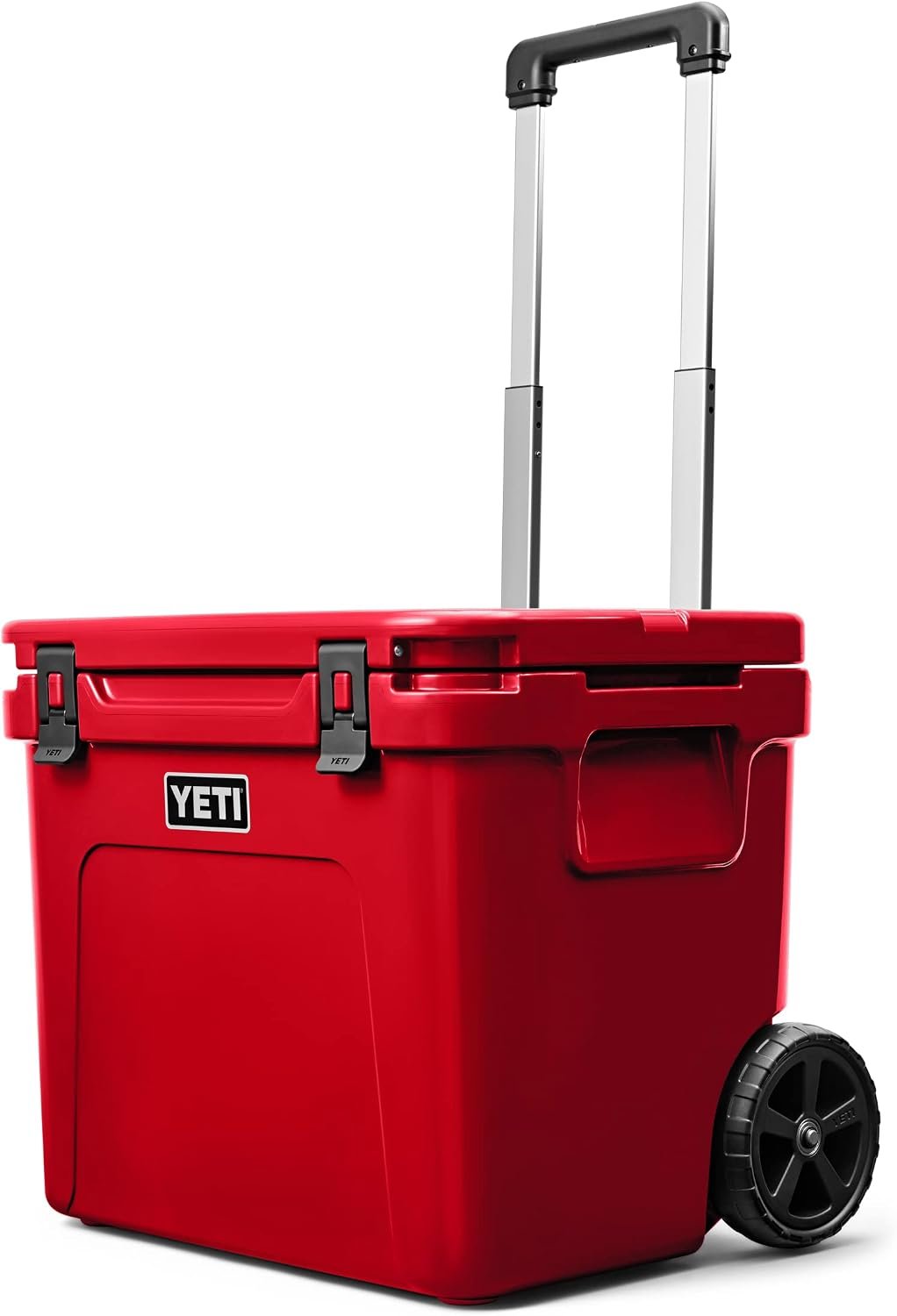
- YETI Roadie 48: 6.8 days of ice in a lab test.
- YETI Tundra 45: 5 days in a hot-room test, and 10 days in a separate GearJunkie test.
- RTIC 52 Ultra-Light: 5.8 days of ice in a lab test.
- Engel HD30: food below 40 degrees F for 3 days.
- Soft bags: food below 40 degrees F for about 3 days at best. Most held less than 2 days.
A maker claim runs longer than a lab test. A claim of 10 days of ice is a lab number with the lid shut in a cool room, not a trip number. I read the claim, then I look for a test number. The cooler buyer’s guide has the full test numbers by type.
Ice Life Factors
Foam thickness: Thick foam slows heat. A rotomolded cooler has 2 inches or more of foam in the walls. A thin cooler has less than 1 inch. Thick foam holds ice for days. Thin foam holds ice for hours.
The seal: A full gasket around the lid holds cold air in. A lid with no gasket leaks cold air out. I press the lid, check the gasket, and check the latch pull. Thick latches hold the lid tight.
The sun: Sun heats the shell and melts the ice. I keep the cooler in the shade. I put a light towel or a blanket over it in the sun. I keep it off hot ground when I can.
How often I open it: Every open lets warm air in and cold air out. I take out what I need in one open, then I shut the lid. I run a separate drink cooler on a long trip so the food cooler stays shut.
How full it is: A full cooler holds cold longer than a half-empty one. Air gaps warm fast. I fill the cooler full and fill gaps with cube ice.
The ice type: Block ice melts slow. Cube ice melts fast. I use block ice for the base and cube ice to fill the gaps. Frozen water bottles melt slow and turn into cold drinking water.
The start temperature: A warm cooler melts the first ice in hours. A cold cooler keeps the new ice solid. I pre-chill the cooler the night before. The pre-chill guide gives the steps.
Hard vs Soft vs Wheeled
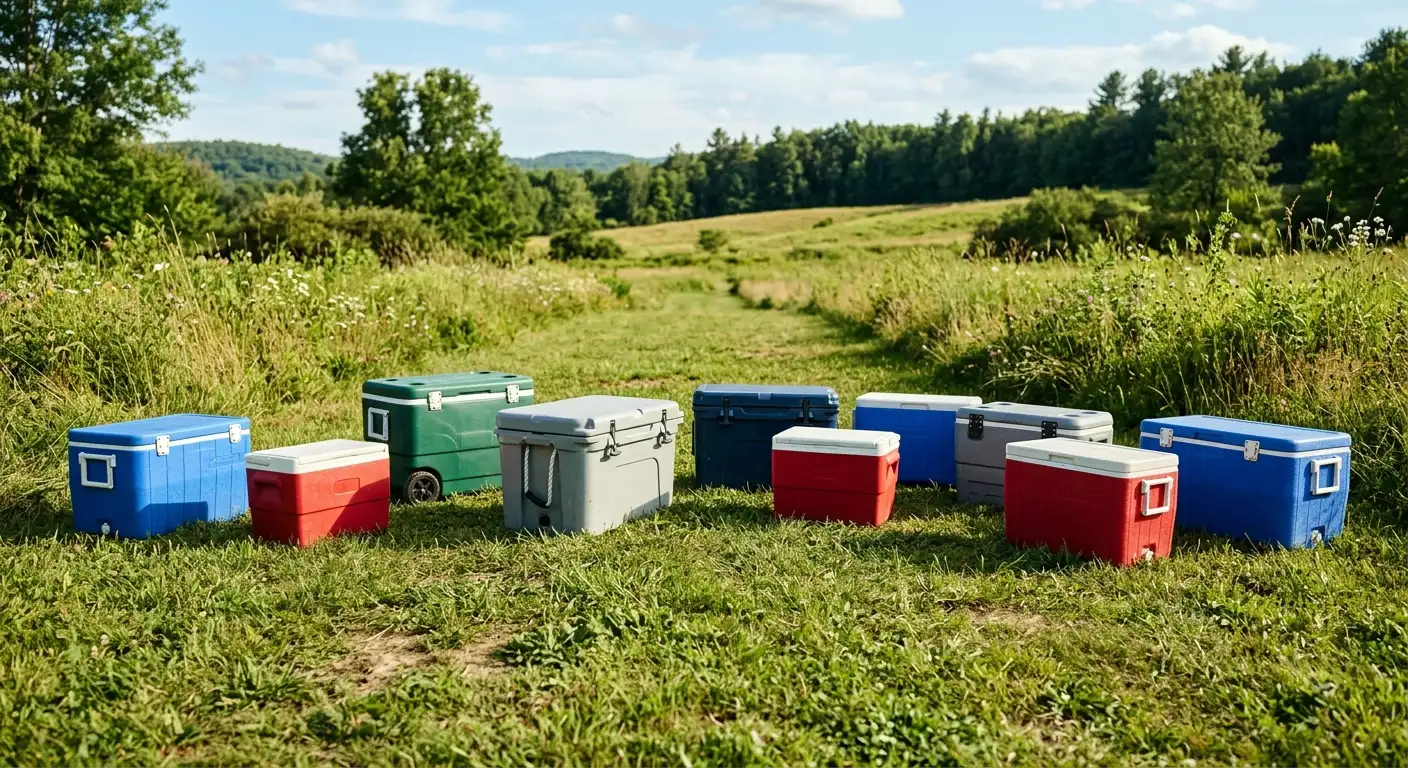
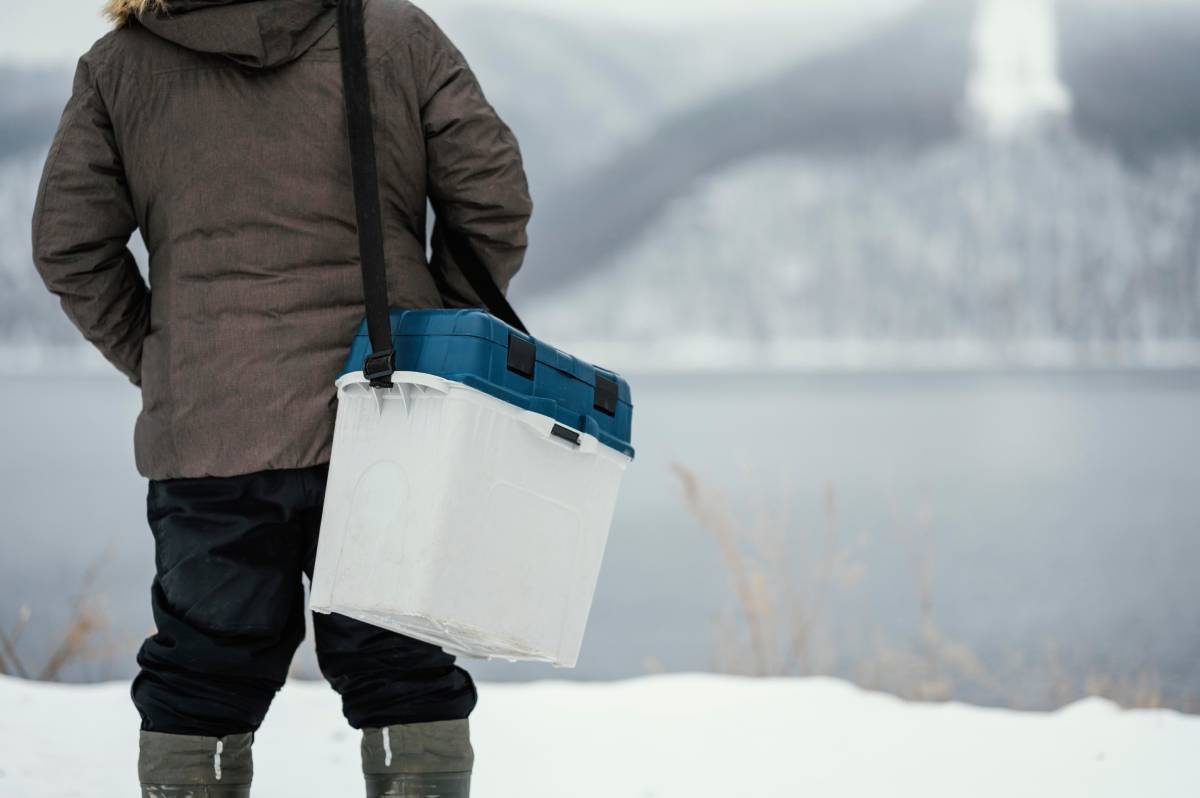
A hard cooler holds ice the longest, from days to a week. A rotomolded hard cooler holds ice for 4 to 6 days in a lab test. A standard hard cooler holds ice for 2 to 3 days. A soft bag holds ice for hours to a few days. The best soft bags held food below 40 degrees F for about 3 days. Most held less than 2 days.
A wheeled cooler is a hard cooler with wheels. It holds ice about as long as the same hard cooler with no wheels. The wheels add weight, not ice life.
I pick the type by the trip. A week off grid needs a rotomolded hard cooler. A day out needs a soft bag or a small hard cooler. A long walk needs a wheeled cooler. The hard vs soft guide compares the two forms with lab test numbers.
How Long Ice Lasts by Cooler
| Cooler type | Ice life, lab test |
|---|---|
| Large rotomolded hard cooler | 4 to 6 days |
| Mid hard cooler | 2 to 3 days |
| Small hard cooler | 1 to 2 days |
| Premium soft bag | Up to 3 days of food below 40 degrees F |
| Standard soft bag | 1 to 2 days of food below 40 degrees F |
| Lunch bag | A few hours |
These are lab numbers with the lid shut. My trip runs shorter. I plan for a day less than the lab number on a hot trip, and I add ice when I am unsure.
How I Read a Claim
I read a maker claim in three steps.
- I check the test room. A claim from a cool room runs longer than a claim from a hot room. A claim with no room named is a best case.
- I check the ice amount. A claim with a full cooler runs longer than a claim with a half-full cooler. A claim with no ice amount named is a best case.
- I check the lid. A claim with the lid shut runs longer than a claim with the lid opened on a schedule. A claim with no lid note is a best case.
I trust a claim when it matches a lab test. I doubt a claim when it runs far past the lab test for the same cooler. I buy one size up in ice life when I am unsure.
Mistakes I See Most
Trusting the claim: A maker claim of 10 days of ice is a lab number, not a trip number. I check a test number, or I buy one size up in ice life.
Skipping the pre-chill: A warm cooler melts the first ice in hours. I pre-chill the night before, and I chill the food and drinks too.
Packing it half full: Air gaps warm fast. I fill the cooler full and fill gaps with cube ice.
Opening the lid all day: Each open lets warm air in. I take out what I need in one open, and I run a separate drink cooler on long trips.
Leaving it in the sun: Sun heats the shell and melts the ice. I keep the cooler in the shade and cover it with a light towel.
Ice Retention for Coolers Explained
How long does ice last in a cooler?
It runs from a few hours in a cheap bag to 6 or more days in a large rotomolded cooler. The food stays cold for less time than the last ice cube lasts. I plan around the food staying at or below 40 degrees F.
What is the best cooler for ice retention?
A large rotomolded hard cooler holds ice the longest, 4 to 6 days in a lab test. The best coolers for longest ice retention lists 7 picks for multi-day trips.
Does block ice last longer than cube ice?
It does. Block ice melts slow. Cube ice melts fast and cools fast. I use block ice for the base and cube ice to fill the gaps.
How do I make ice last longer?
I pre-chill the cooler, the food, and the drinks. I pack it full with the 2 to 1 ice ratio. I use block ice. I keep it in the shade. I open the lid as little as I can. The pack a cooler guide gives the full pack order.
Why does my cooler lose ice so fast?
The most common cause is a warm start. A warm cooler melts the first ice in hours. Other causes are thin foam, a weak seal, sun, a half-full load, and a lid opened all day.
Is a YETI worth it for ice retention?
A YETI holds ice for days in lab tests, and so do other rotomolded coolers at a lower price. I pay for thick foam and a tight seal, not for a brand name. The YETI vs RTIC vs Igloo guide compares the three brands with test numbers.
Have any other questions?
Contact usRelated Reads
- Cooler Buyer’s Guide: pick the right size, type, and build
- How to Make Ice Last Longer in a Cooler
- How to Pack a Cooler: the pack order that keeps food cold
- How to Pre-Chill a Cooler: chill it the night before a trip
- Best Coolers for Longest Ice Retention: 7 picks for multi-day trips
- Best Ice Chest Coolers: the top picks across all types
Sources
- FoodSafety.gov, Keep Food Safe: cold food must stay at or below 40 degrees F
- FDA, Handling Food Safely While Eating Outdoors: pack, chill, and serve food safe outdoors
- Outdoor Gear Lab cooler tests: lab ice retention numbers cited in this guide

Join the discussion
Own this product or tested an alternative? Share your experience to help other readers decide.