
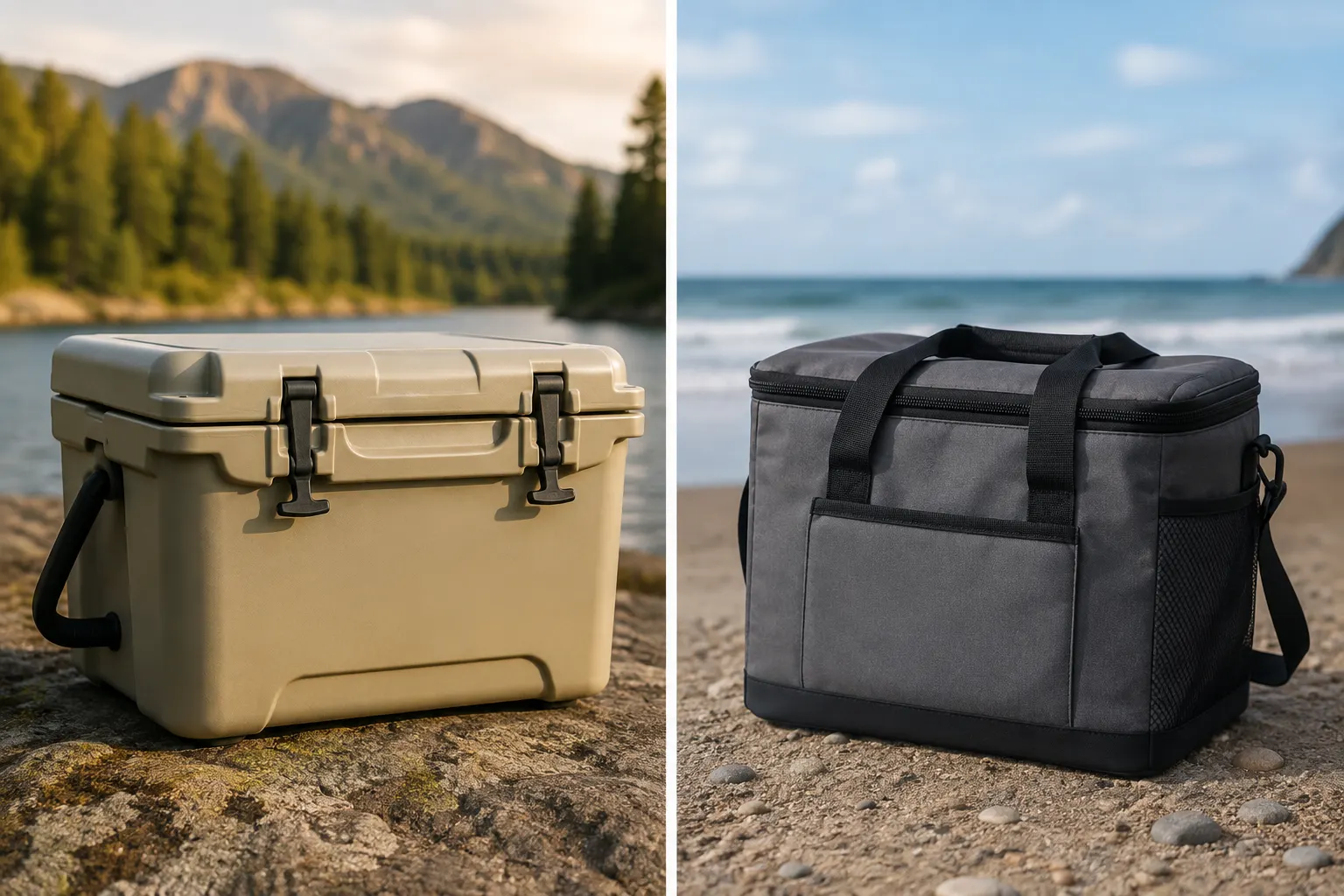
I pick a hard cooler for trips that last more than a day. I pick a soft cooler for a day out with a light load. That short answer fits most buyers. A hard cooler holds ice for days. A soft cooler holds ice for hours. A hard cooler also works as a seat, a step, and a table. A soft cooler folds flat and rides on a shoulder. I compare the two forms here with lab test numbers, weights, and prices.
What Sets Hard and Soft Coolers Apart
A hard cooler has a rigid plastic shell. Foam sits inside the shell. A gasket seals the lid. Latches lock the lid shut. A soft cooler has a fabric shell. Closed-cell foam sits inside the fabric. A zipper or a magnetic strip closes the top. A welded liner keeps melt water in. Most soft bags have no drain plug.
The shell is the main split. Thick foam holds ice longer. Thin foam weighs less. Build also splits by construction, not just by shell. A rotomolded hard cooler uses one thick shell with foam inside. A standard hard cooler uses thinner plastic with foam fill. The rotomolded vs traditional guide on Cooler Critic shows the build split in plain terms. This guide stays on form factor.
Ice Retention Comparison
Ice life is the biggest gap between the two forms. Outdoor Gear Lab tested both types in 2026 with the same method. Each cooler was sealed in a cool room with a logger inside. The logger tracked the day the inside passed 40 degrees F. Food stays safe at 40 degrees F or below.
Hard coolers won by a wide margin. The best hard cooler in the test, the YETI Roadie 48, stayed below 40 degrees F for 6.8 days. Rotomolded coolers in the 45 to 65 quart range held 4.1 to 5.5 days. Even a basic hard cooler held 2.4 days. Soft coolers ran far shorter. The best soft cooler, the YETI Hopper M20, held 3.6 days. The Engel HD30 held 3.0 days. Most other soft coolers stayed below 2.7 days. A small lunch bag held less than 1 day.
Maker claims run higher than lab numbers. Lab tests use a sealed cooler in a cool room, while real trips add sun, warm air, and a lid that opens for drinks. Plan on the lab number, not the box number. The ice retention guide on Cooler Critic explains the gap between a claim and a test result.
Portability & Storage (Backpack-Style vs. Rigid Boxes)
A soft cooler wins on carry weight. A premium soft tote weighs 3 to 7 pounds empty. A rotomolded hard cooler weighs 23 to 44 pounds empty. A YETI Tundra 45 weighs 23 pounds empty. A YETI Hopper M30 weighs 6.8 pounds empty.
Backpack soft coolers free both hands. The YETI Hopper BackFlip 24 weighs 5.3 pounds empty. It holds 20 cans with a 2 to 1 ice to can ratio. Padded straps spread the load across both shoulders. No hard cooler does that job.
Storage is the other win for soft coolers. An empty soft bag folds flat or squashes into a trunk corner. An empty hard cooler keeps its full size in the garage. A hard cooler needs a clear footprint and does not squeeze. A large hard cooler with wheels is the one exception. It rolls behind one person. The wheeled vs standard guide on Cooler Critic covers that trade in full.
Best Use Cases for Hard-Sided Coolers
A hard cooler suits camp trips, boat trips, and road trips past one day. A hard cooler holds ice for a full weekend. It keeps raw meat safe at 40 degrees F or below.
Long trips are the clearest case. A rotomolded cooler holds ice for 4 to 7 days in lab tests. The camping guide on Cooler Critic lists hard picks by trip length.
Rough use is the second case. A hard shell takes a drop, a knock, and a stack of gear. A soft bag has no spare parts. Makers back that split with warranty terms: YETI gives 5 years on a hard Tundra and 3 years on a Hopper. Engel gives 10 years on a hard cooler and 1 year on a soft bag.
Best Use Cases for Soft-Sided Coolers
A soft cooler suits a day out with a light load. Beach days, picnics, and short hikes all fit. A soft bag holds drinks and lunch for one or two people. It rides on a shoulder, fits in a kayak hatch, and folds flat at the end of the day.
Travel is a strong case. A soft bag squashes into a suitcase and packs flat in a car trunk.
Boats and kayaks are a third case. A soft bag sits low in a kayak hatch and wedges between seats on a small boat. It will not crack a fiberglass deck or slide and dent a hull. A small YETI Hopper Flip 12 suits a solo lunch and a short beach walk.
Price Range Snapshot
Soft bags start low. A basic soft bag costs less than a budget hard cooler. A premium soft tote costs about the same as a mid-range hard cooler.
The table below shows the ranges. The budget vs premium guide on Cooler Critic covers the cost trade in full.
| Cooler Type | Ice Retention | Weight | Price Range | Best For |
|---|---|---|---|---|
| Hard, budget (Coleman, Igloo style) | 2 to 5 days, lab | 4 to 21 lb | $20 to $100 | Weekend car camp |
| Hard, premium rotomolded | 4 to 7 days, lab | 23 to 44 lb | $200 to $500 | Long trips, rough use |
| Soft, budget bag | Hours to 1 day | Under 1 to 4 lb | $17 to $50 | Lunch, beach, day trips |
| Soft, premium tote (Hopper, Engel HD30) | 1 to 3.6 days, lab | 3 to 7 lb | $200 to $350 | Boat, travel, day trips |
Prices in this table are Amazon or maker list prices checked Nov 21, 2026. Prices change by color, size, and seller. Check the live listing before you buy. Ice days are Outdoor Gear Lab 2026 lab results, days below 40 degrees F. See the hard vs soft cooler numbers for the full lab comparison.
FAQs
Hard vs Soft Cooler
Can a soft cooler keep food safe for a full day?
Yes, with a good pack. Pre-chill the bag. Pack cold food, not warm food. Keep the bag in shade. The FoodSafety.gov guide gives the full steps.
Do soft coolers leak?
A good soft cooler does not leak when shut. Welded liners hold melt water in. A YETI Hopper M30 uses magnets plus buckles. YETI warns against dry ice in Hopper coolers.
Is a hard cooler worth the extra weight?
Yes, for trips past one day. A hard cooler holds ice for days, not hours. A soft cooler wins for a day out.
Can a soft cooler fit in a kayak hatch?
Yes, in most cases. A soft bag bends to fit a hatch opening. A rigid box does not bend. See the size guide on Cooler Critic for hatch sizes.
Does a soft cooler work for a multi-day camp trip?
No, not as the main cooler. A soft bag holds ice for a day at most. A three-day trip needs a hard cooler for food. A soft bag can serve as a second cooler for drinks.
Are soft coolers easy to clean?
Yes, in most cases. Turn a soft bag inside out and rinse the liner. Wipe the shell with soap and water. Let the bag dry with the top open. The USDA guide on packing a cooler gives food safety steps for both forms.
Have any other questions?
Contact usWhich Should You Buy?
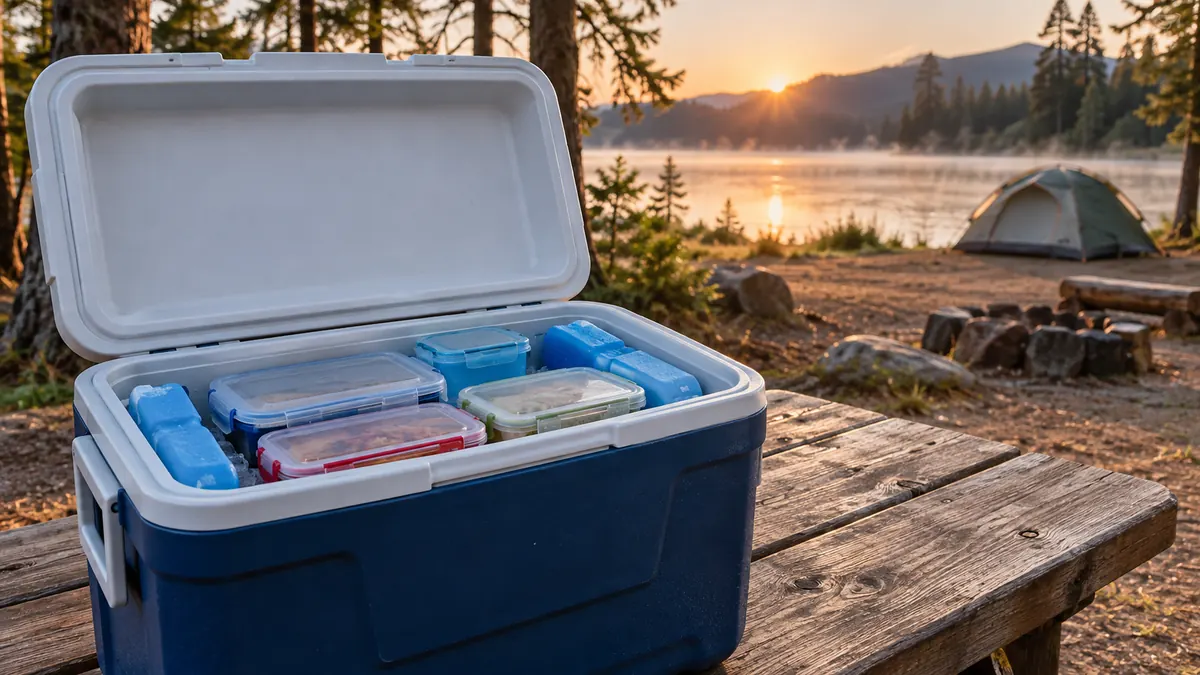
I buy a hard cooler for trips that run past one day. I buy a soft cooler for a day out with a light load. One cooler does not fit every trip. A family that camps for a weekend needs a hard cooler. A solo hiker needs a soft bag. I start with the trip length. I pick the form. Then I pick the size.
Related Reads
- Best Ice Chest Coolers – the parent guide with 10 top picks
- Best Soft-Sided Coolers – 7 soft bags ranked by ice life, weight, and build
- Rotomolded or Traditional Cooler – the construction guide, for build detail after picking a form