

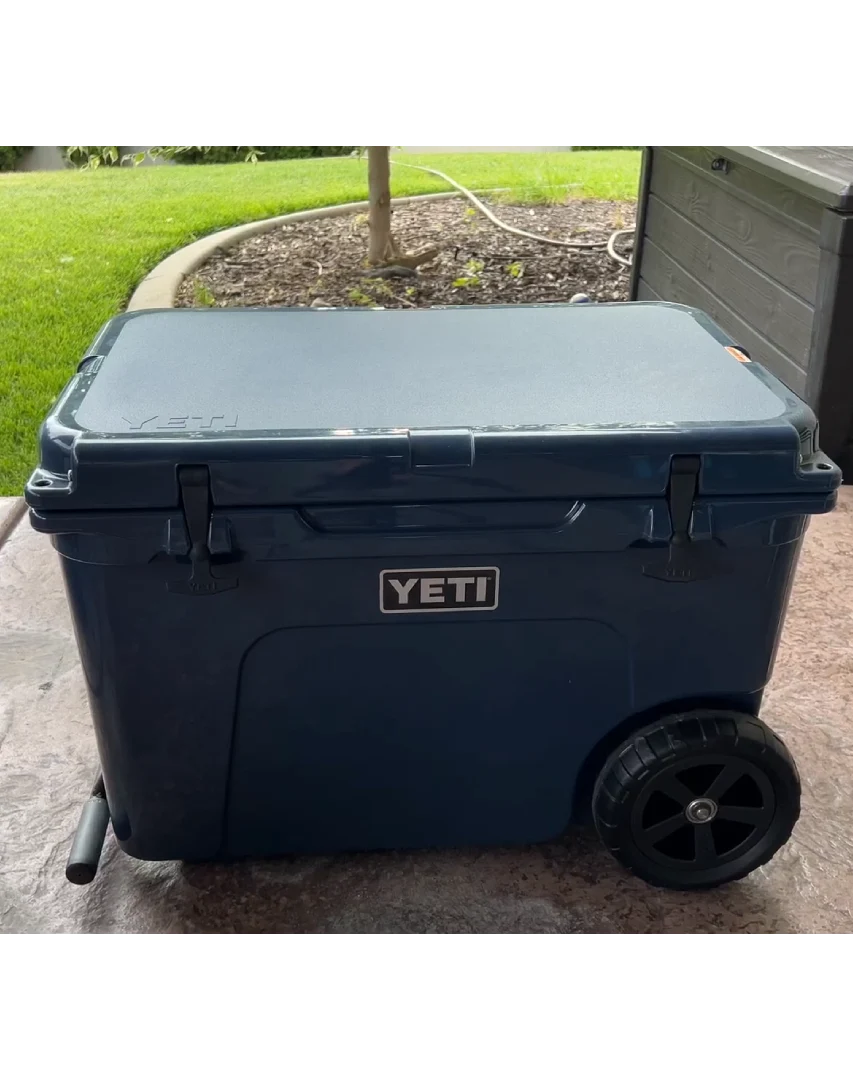
A wheeled cooler is a hard cooler with wheels and a pull handle. A standard cooler is the same box with carry handles and no wheels. The ice life is about the same. The build is about the same. The difference is the walk.
I pick a wheeled cooler when the walk is long and the load is heavy. I pick a standard cooler when the walk is short, the ground is rough, or the cooler must fit a tight space.
The Walk
A full 45 quart cooler tops 60 pounds. I carry that load in two hands, or I pull it on wheels. On a long walk to a beach or a campsite, wheels save my back and my arms. On a short walk from the car to the picnic table, wheels save nothing.
I check the wheels before I buy. Large wheels roll well on sand, grass, and gravel. Small wheels stick in soft ground and force me to drag the box. A single axle with two wheels rolls straight. A cooler with small wheels and a short handle pulls low and tips on rough ground.
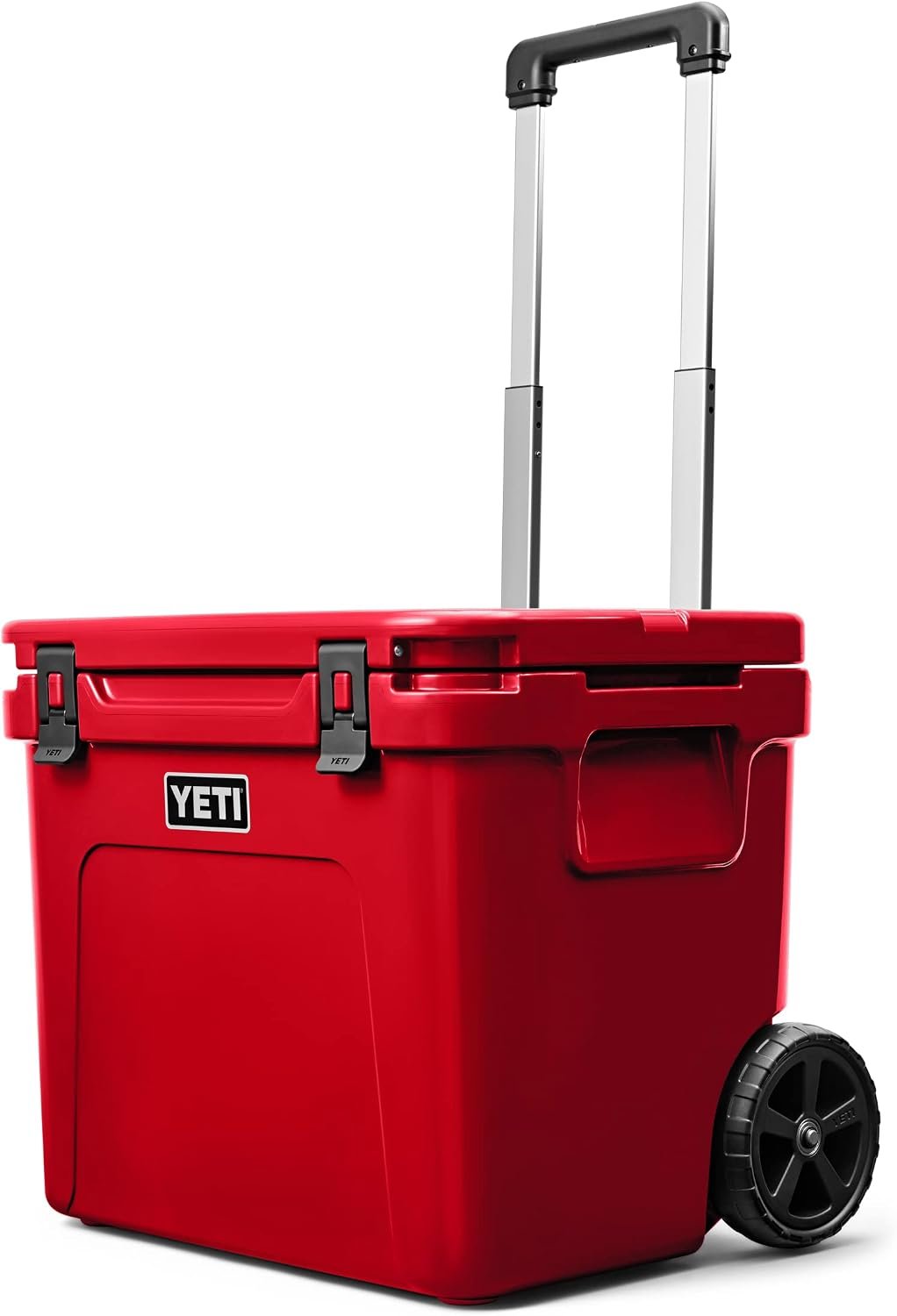
I check the handle too. A telescoping handle pulls like a suitcase. A rope handle pulls low and twists my wrist. I pull the cooler in the store, or I check the handle type in the listing.
The Ground
Wheels work on hard ground. They work on a paved path, a boardwalk, a parking lot, and a firm beach. They fail on soft sand, deep mud, and rocky trails. A wheel sinks in soft sand. A wheel catches on a rock. A wheel spins in mud.
A standard cooler works on any ground. I carry it over sand, rocks, and mud. I lift it over a curb. I set it down on a slope. I carry it up stairs. A wheeled cooler does none of that well.
I match the cooler to the ground. A beach trip with a paved path suits a wheeled cooler. A beach trip with soft sand suits a standard cooler or a soft bag. A camp trip with a rough trail suits a standard cooler.
Size, Weight, and Price
Wheels add weight and cost. A wheeled cooler weighs 5 to 10 pounds more than the same standard cooler. The wheels, the axle, and the handle add the weight. A wheeled cooler costs 30 to 80 dollars more than the same standard cooler.
Wheels add size too. The wheels and the handle stick out past the box. A wheeled cooler needs more room in the car trunk. I measure the trunk before I buy. A standard cooler fits a tight trunk better.
Wheels add parts that can break. An axle bends. A wheel cracks. A handle jams. A standard cooler has no moving parts to fail. I check the wheel and handle build before I buy, and I pick thick wheels and a metal handle when I can.
Ice Life
A wheeled cooler holds ice about as long as the same hard cooler with no wheels. The foam, the seal, and the lid are the same. The wheels do not change the ice life.
I check the foam and the seal the same way on both. I look for walls with 2 inches or more of foam. I look for a full gasket seal around the lid. I press the lid and check the latch pull. The ice retention guide has the full test numbers by type.
Which One Suits Your Trip
| Trip | My pick |
|---|---|
| Long walk on a paved path | Wheeled cooler, large wheels |
| Beach day with soft sand | Standard cooler or soft bag |
| Camp trip on a rough trail | Standard cooler |
| Boat day | Standard cooler with tie-down slots |
| Tailgate from the car | Wheeled cooler, or a standard cooler with two handles |
| Work lunch or school | Soft bag, no wheels |
| Week-long camp | Large standard rotomolded cooler |
I pick a wheeled cooler for a long walk on hard ground. I pick a standard cooler for rough ground, tight spaces, and boats. I pick a soft bag for a light load and a short walk.
Mistakes I See Most
Buying wheels for soft sand: Small wheels sink in soft sand. I pick a standard cooler or a soft bag for a soft-sand beach.
Skipping the wheel check: Small wheels and a short handle pull low and tip. I check the wheel size and the handle type before I buy.
Forgetting the trunk: A wheeled cooler needs more room than the same standard cooler. I measure the trunk before I buy.
Paying for wheels I will not use: A cooler that rides in a truck bed to a campsite needs no wheels. I pay for wheels only when the walk is long.
Ignoring the weight: Wheels add 5 to 10 pounds. A wheeled cooler full of ice is heavier than the same standard cooler full of ice. I check the empty weight, then I add the load.
Wheeled Coolers vs Standard Coolers
Are wheeled coolers worth it?
They are worth it when the walk is long and the ground is hard. They save my back on a long walk to a beach or a campsite. They are not worth it on soft sand, rough trails, or boats.
Do wheeled coolers hold ice as long as standard coolers?
They do, when the foam and the seal match. The wheels do not change the ice life. I check the foam thickness and the gasket, not the wheels.
What size wheels do I need?
I pick large wheels for sand, grass, and gravel. Small wheels stick in soft ground. I check the wheel size in the listing, and I pull the cooler in the store when I can.
Can I take a wheeled cooler on a boat?
I can, when the deck is flat and the cooler has tie-down slots. Wheels roll on a moving boat, so I tie the cooler down or pick a standard cooler with no wheels.
How much heavier is a wheeled cooler?
Wheels, the axle, and the handle add 5 to 10 pounds. A wheeled cooler costs 30 to 80 dollars more than the same standard cooler.
Should I get a wheeled cooler for camping?
I get one when the campsite is a long walk on a paved path or firm ground. I get a standard cooler when the trail is rough, the ground is soft, or the cooler must fit a tight trunk.
Have any other questions?
Contact usRelated Reads
- Cooler Buyer’s Guide: pick the right size, type, and build
- Best Wheeled Coolers: 7 rolling coolers for long walks
- Best Ice Chest Coolers: the top picks across all types
- Ice Retention for Coolers Explained: test numbers by cooler type
- How to Pack a Cooler: the pack order that keeps food cold
- How to Pre-Chill a Cooler: chill it the night before a trip
Sources
- FoodSafety.gov, Keep Food Safe: cold food must stay at or below 40 degrees F

Join the discussion
Own this product or tested an alternative? Share your experience to help other readers decide.