

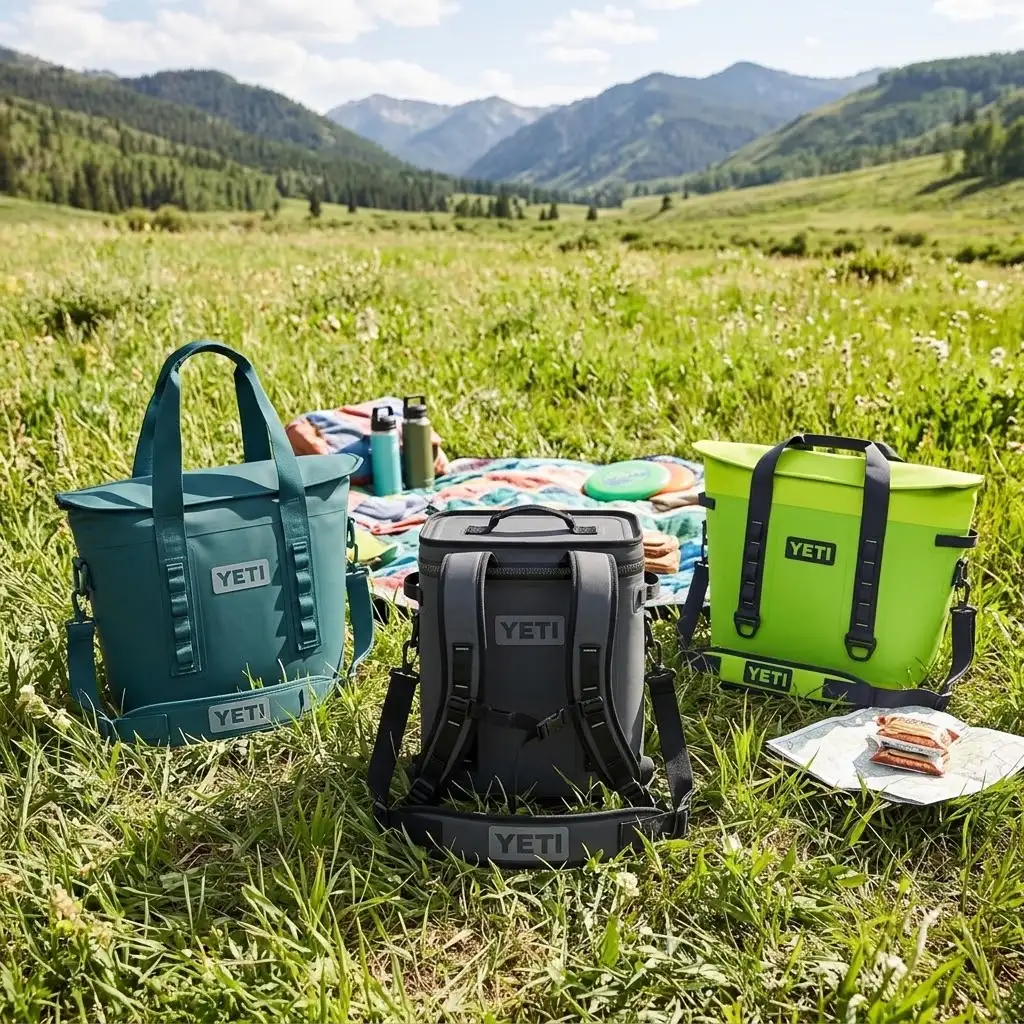
I buy a cooler for the trip first, and the cooler second. A cooler that suits a day at the beach will fail on a week-long camp trip. A cooler that holds ice for a week is too heavy for a lunch bag. I start with the trip, the group, and the days. Then I pick the size, the type, and the build. This guide walks through each choice in that order, with test numbers and links to the full guides on this site.
Start With the Trip
I ask three questions before I look at any cooler. One, how many people eat and drink from it. Two, how many days it must stay cold. Three, how it gets to the site. A car trunk, a boat deck, a kayak hatch, and a walk from the car each need a different cooler.
A day trip for one or two people needs a small bag or a small hard box. A weekend for a family needs a 45 to 55 quart hard cooler. A week off grid needs a large rotomolded cooler with thick foam. A boat day needs a cooler that will not slide, crack a deck, or leak. A work lunch needs a soft bag that folds flat at the end of the day.
| Trip | My pick |
|---|---|
| Day trip, 1 to 2 people | Small soft bag or mini hard cooler, 12 to 24 quarts |
| Weekend, small family | Hard cooler, 45 to 55 quarts |
| Week-long camp or off grid | Large rotomolded cooler, 55 to 65 quarts |
| Boat or kayak | Soft bag or low hard cooler with tie-down slots |
| Work lunch or school | Soft lunch bag, 6 to 16 cans |
The parent guide to the best ice chest coolers lists the top picks across all types. I use it when I want one list for every use.
Pick the Right Size
Size is the first spec I check, and it has two parts. Quart size tells me the volume inside. Outside size tells me if it fits the car, the trunk, or the boat. I check both. A 45 quart cooler can be tall and narrow, or short and wide. Only one of those shapes fits a tight trunk.
I check can count with ice, not can count with no ice. Ice takes room. A cooler that holds 26 cans with ice can hold 54 cans with no ice. The gap is normal. I plan food and drinks around the with-ice number.
| Group and trip | Size that fits |
|---|---|
| 1 to 2 people, 1 day | 12 to 24 quarts |
| 2 to 4 people, weekend | 35 to 45 quarts |
| Family of 4, weekend | 45 to 55 quarts |
| Large group, long weekend | 55 to 70 quarts |
| Week-long trip | 65 quarts and up, or two coolers |
I size up when I feel unsure. A cooler that is a bit too big wastes some ice. A cooler that is too small ruins the trip. I also measure the trunk, the truck bed, or the boat deck before I buy. The cooler size guide has a full chart by group size and trip length.
Hard, Soft, or Wheeled
A cooler comes in three forms. Each form suits a different trip.
A hard cooler has a rigid shell, thick foam, and a gasket seal. It holds ice the longest, from days to a week. It also works as a seat, a step, and a table. It weighs the most, and it keeps its full size in the garage. I pick a hard cooler for trips past one day, for camp, for boats, and for rough use.
A soft cooler has a fabric shell and closed-cell foam. It folds flat, rides on a shoulder, and fits in a kayak hatch or a car trunk corner. It holds ice for hours to a few days. The best soft bags in our tests held food below 40 degrees F for about 3 days. Most held less than 2 days. I pick a soft cooler for a day out, for travel, and for a light load.
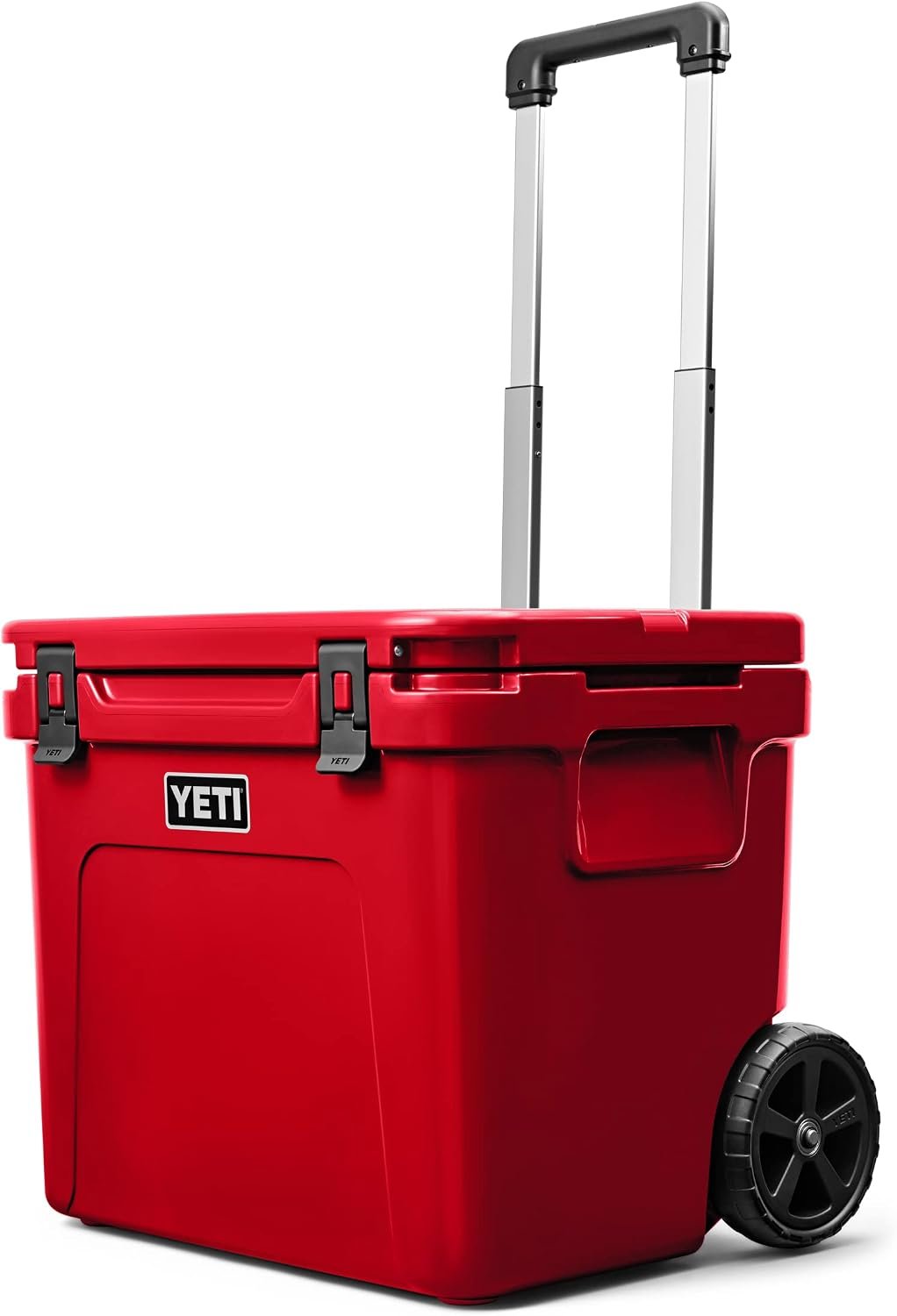
A wheeled cooler is a hard cooler with wheels and a pull handle. It saves lifting on long walks to a beach or a campsite. Wheels add weight and cost. Large wheels roll well on sand and grass. Small wheels stick in soft ground. I pick a wheeled cooler when the walk is long and the load is heavy.
The hard vs soft guide compares the two forms with lab test numbers. The wheeled vs standard guide covers the full trade between wheels and a plain carry cooler.
Build and Materials
Build decides how long a cooler lasts and how well it holds ice. I check the shell, the foam, the seal, and the hardware.
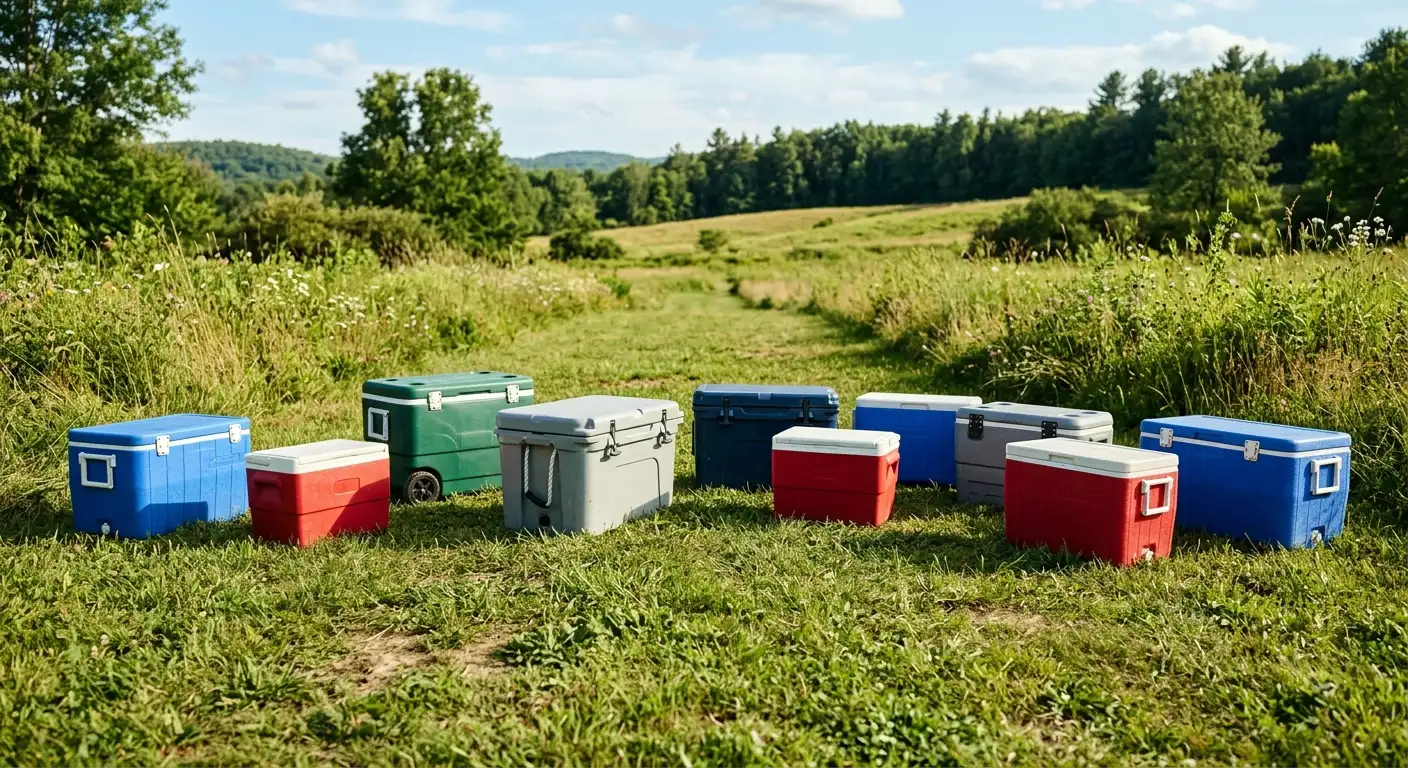
A rotomolded shell is one thick piece of plastic with foam inside. It has no seams to split. It takes drops, sun, and years of hard use. A standard hard cooler uses thinner plastic with foam fill. It costs less and weighs less. It holds ice for fewer days. The rotomolded vs traditional guide sets out the build gap in plain terms.
I look for walls with 2 inches or more of foam. I look for a full gasket seal around the lid. A tight lid with a full gasket holds cold air in. I press the lid, check the gasket, and check the latch pull. Thick latches hold the lid tight. Metal latches and hinges last longer than thin plastic ones. A drain plug low on the side makes cleanup fast.
Fabric matters on soft coolers. A tough shell resists tears and punctures. Welded seams resist leaks better than stitched seams. A stitched seam can wick water. A welded seam seals the join. I check the fabric weight and the seam type before I buy.
Ice Life: Claims vs Tests
Ice life is the spec I trust the least. A maker claim is a best-case number from a cool room, with the lid shut, with no food to cool. My trip is not a cool room. I read the claim, then I look for a test number.
Lab tests give a fair read. The YETI Roadie 48 held ice for 6.8 days in a lab test. The YETI Tundra 45 held ice for 5 days in a hot-room test, and 10 days in a separate GearJunkie test. The Engel HD30 held food below 40 degrees F for 3 days. The RTIC 52 held ice for 5.8 days in a lab test. Soft bags held food below 40 degrees F for about 3 days at best.
Food safety sets the line. Food must stay at or below 40 degrees F. Ice can still sit in the box after the food warms past that line. I plan around the time the food stays cold, not the time the last cube melts. The ice retention guide has the full test numbers by type.
I use these bands as a rough rule:
| Need | What to buy |
|---|---|
| A few hours | Almost any bag or box works |
| 1 day | A mid-size hard or soft cooler |
| 2 to 3 days | A large premium soft bag, or a mid hard cooler |
| 4 to 5 days | A rotomolded hard cooler |
| 6 days and up | A large rotomolded cooler, pre-chilled and packed full |
I pre-chill a hard cooler the night before a trip. I put a bag of ice in it, shut the lid, and let the foam cool down. A warm cooler melts the first ice fast. The pre-chill guide gives the steps. I also pack it full. A full cooler holds cold longer than a half-empty one. The packing guide shows the order: cold food at the bottom, ice on top, and the lid shut as much as I can.
Carry and Weight
Weight is easy to forget and hard to fix later. A 45 quart rotomolded cooler weighs about 25 pounds empty. Add 20 pounds of food and 20 pounds of ice, and the box tops 60 pounds. I check the empty weight, then I add the load.
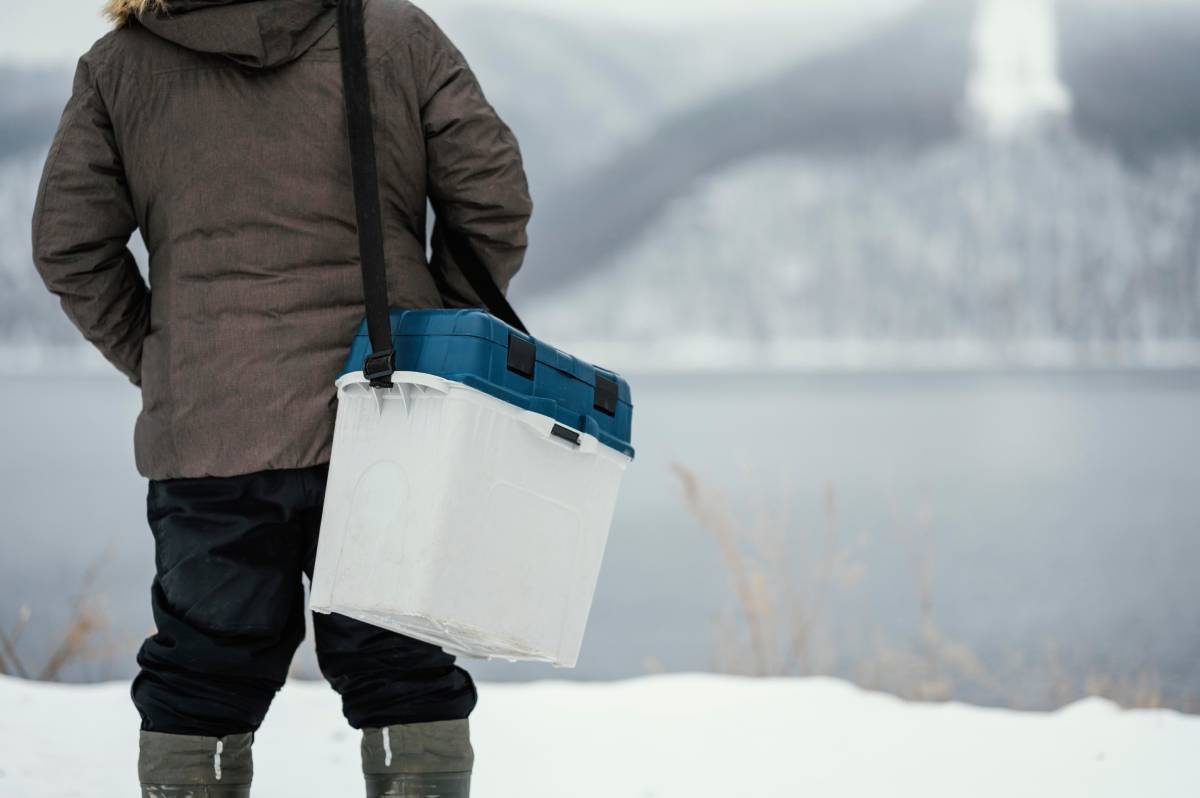
I check the carry method next. Two side handles work for two people. A single top handle works for a small box. A shoulder strap works for a soft bag. A rope handle spreads the load across a hand. A pull handle with large wheels works for a long walk. I lift the cooler in the store, or I check the handle type in the listing.
I match the carry to the trip. A 65 quart cooler with no wheels is a two-person lift. A soft bag with a padded strap is a one-person carry. A wheeled cooler with large wheels rolls over sand and grass. Small wheels stick in soft ground and force me to drag the box.
Waterproof, Leaks, and Drains
A cooler must hold water in, or keep water out, based on the use. A soft bag with a weak zipper leaks melt water on a car seat. A hard cooler with a poor gasket lets warm air in and cold air out.
I check the zipper on a soft cooler first. A waterproof zipper costs more and needs two hands to open. A plain zipper opens fast and leaks more. I pick the waterproof zipper for a kayak or a boat, and the plain zipper for a lunch bag.
I check the liner next. A thick liner resists tears and holds a seal. A thin liner splits at the corners. I run a finger along the liner seams and look for gaps.
I check the drain plug on a hard cooler. A low drain clears melt water fast. A high drain leaves a pool at the bottom. A drain with a hose thread lets me drain into a sink. A drain that sticks out can catch on a car door.
Extra Storage and Features
A cooler with a dry basket keeps food and dry gear out of the melt water. A cooler with a cup holder holds a can on top. A bottle opener on the side saves a hunt for one. Tie-down slots hold the box to a boat deck or a truck bed. A lid that holds weight turns the cooler into a seat or a small table.
I skip features I will not use. A built-in speaker adds cost and weight. A cutting board lid adds bulk. A fish ruler helps on a boat and means nothing on a road trip. I pay for the features that match my trip, and I skip the rest.
A dry basket is the one extra I pick most. It keeps sandwiches, fruit, and dry snacks off the ice. The cooler accessories guide lists baskets, ice packs, locks, and tie-down kits that fit the main brands.
Price and Value
A cooler costs from about 20 dollars to 500 dollars. Price tracks build, foam, and ice life. A lunch bag costs 20 to 40 dollars. A mid hard cooler costs 60 to 150 dollars. A premium rotomolded cooler costs 200 to 500 dollars.
I buy the cheapest cooler that fits the trip. A lunch bag needs no rotomolded shell. A week off grid needs the thick foam. I pay for ice life and build, not for a brand name.
Warranty is part of value. YETI covers its hard coolers for 5 years. Pelican covers its coolers for life. RTIC covers its Ultra-Light coolers for 3 years. A long warranty shows the maker trusts the build. I check the warranty term and the claim steps before I buy.
The budget vs premium guide compares a cheap hard cooler and a premium rotomolded cooler side by side, with test numbers.
Mistakes I See Most
Buying too big: A 100 quart cooler for two people wastes ice, takes the whole trunk, and needs two people to lift. I buy the size that fits the group, not the size that looks tough.
Trusting the claim: A maker claim of 10 days of ice is a lab number, not a trip number. I check a test number, or I buy one size up in ice life.
Skipping the pre-chill: A warm cooler melts the first ice in hours. I pre-chill the night before, and I chill the food and drinks too. Warm drinks melt ice fast.
Ignoring the outside size: A cooler that fits the group can still miss the trunk. I measure the trunk, the truck bed, or the boat deck before I buy.
Buying for the wrong trip: A soft bag for a week off grid fails on day two. A 65 quart rotomolded cooler for a work lunch is a chore to carry each day. I match the cooler to the trip.
Quick Checklist
- Trip, group, and days are set.
- Size fits the group, with ice in the can count.
- Outside size fits the car, trunk, or boat.
- Hard, soft, or wheeled matches the trip.
- Foam is thick, the gasket seals, and the latches hold tight.
- Ice life meets the trip, by a test number, not a claim.
- Carry method fits one person or two, based on the load.
- Drain, liner, and zipper suit the use.
- Price fits the build, and the warranty is clear.
- Pre-chill the night before, pack it full, and keep the lid shut.
Cooler Buyer's Guide
Do I need a rotomolded cooler?
I need one for trips past three days, for rough use, and for hot weather. For a day trip or a lunch bag, a standard hard cooler or a soft bag works fine.
What size cooler do I need for a family of four?
I pick a 45 to 55 quart hard cooler for a weekend. For a week-long trip, I pick 65 quarts and up, or I run two coolers, one for food and one for drinks.
How long does ice last in a cooler?
It runs from a few hours in a cheap bag to 6 or more days in a large rotomolded cooler. The food stays cold for less time than the last ice cube lasts. I plan around the food staying at or below 40 degrees F.
Are YETI coolers worth the price?
I pay for thick foam, a tight seal, and a 5-year warranty. The same build exists in other brands at a lower price. The YETI vs RTIC vs Igloo guide compares the three brands with test numbers.
Should I use ice or ice packs?
I use block ice for long trips, since it melts slow. I use ice packs for short trips and for lunch bags, since they stay dry. I use both when I want cold food and a dry box.
How do I clean a cooler after a trip?
I drain it, wash it with warm water and mild soap, and dry it with the lid open. A sour smell needs a baking soda wash and a full dry. The cleaning guide gives the steps.
Have any other questions?
Contact usRelated Reads
- Best Ice Chest Coolers: the top picks across all types
- Best Coolers for Longest Ice Retention: 7 picks for multi-day trips
- Best Soft-Sided Coolers: 7 soft bags for day trips and travel
- Best Wheeled Coolers: 7 rolling coolers for long walks
- Best Mini Coolers: 7 small coolers for solo trips and work
- Best Coolers for Camping: 7 picks for camp trips
- How to Make Ice Last Longer in a Cooler
- Dry Ice vs Regular Ice
Sources
- FoodSafety.gov, Keep Food Safe: cold food must stay at or below 40 degrees F
- FDA, Handling Food Safely While Eating Outdoors: pack, chill, and serve food safe outdoors
- USDA, Food Safety: safe food handling basics
- Outdoor Gear Lab cooler tests: lab ice retention numbers cited in the ice retention guide

Join the discussion
Own this product or tested an alternative? Share your experience to help other readers decide.