
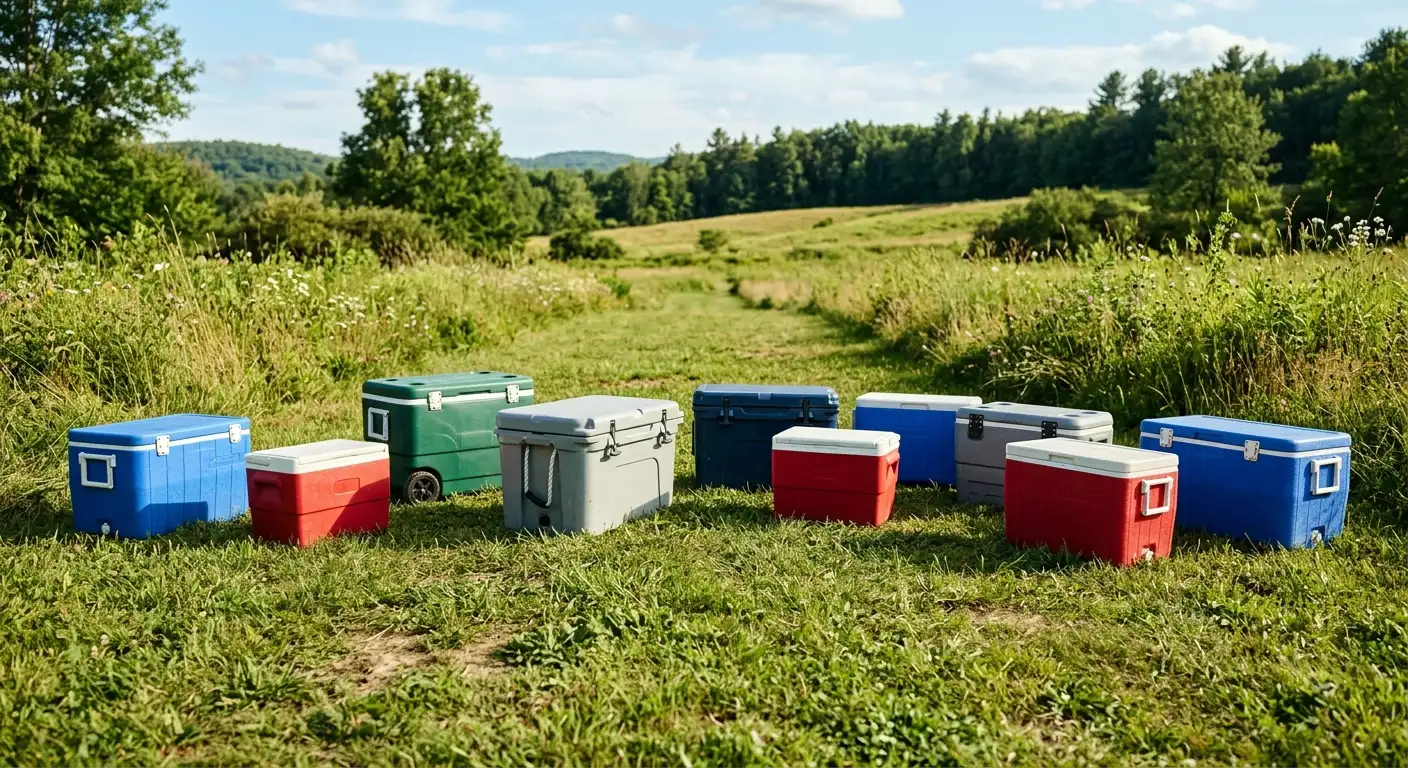
A good ice chest cooler needs to do three jobs well. It has to hold ice for as long as your trip lasts, be easy to load and carry, and match how you actually use it. Over the past few weeks, I researched some of the best coolers available. While I didn’t test each one myself, I relied on real user reviews, field tests, and long-term footage to see how they actually perform. My goal was to find out which coolers work best for camping, beach trips, and picnics.
I looked at real test data across 20+ hard-sided coolers from Yeti, Coleman, RTIC, Rovr, and other major brands to pull together this list of the top 10 best cooler performers. For each one, I checked the wheel quality, how long the ice lasts, how easy the latch is to use, and if the price is fair for what you get.
Rated each cooler on insulation, ease of movement and lifting, storage space, and ease of use. For every cooler, you’ll see full scores, real ice test results, and clear pros and cons. This way, you can pick the right cooler for your trips, not just the most expensive one.
If you’re unsure what size cooler you need for your group or trip, check out our full guide on choosing the right size before you buy.
Quick Picks
- Best Overall: Yeti Roadie 48
- Best for Large Groups: Yeti Roadie 60
- Best for Rough Terrain: Rovr RollR 60
- Best for Boat or Truck Bed Use: Yeti Tundra Haul
- Best for Everyday Use: Coleman Classic Series 65 Wheeled
- Best Budget Wheeled Cooler: Coleman Xtreme 50 with Wheels
- Best Insulation for the Price: RTIC Ultralight 52
- Best Compact Cooler: RTIC Ultra-Light 22
- Best Small Personal Cooler with Wheels: Yeti Roadie 24
- Best Ultra-Light Personal Cooler: Yeti Roadie 15
Comparison Table
| Cooler | Overall Score | Price | Food-Safe Days | Cold Drink Days | Empty Weight |
| Yeti Roadie 48 | 87 | $425 | 6.8 | 7.5 | 26.6 lbs |
| Yeti Roadie 60 | 86 | $475 | 6.3 | 6.9 | 30.7 lbs |
| Rovr RollR 60 | 79 | $400 | 5.4 | 5.9 | 36.6 lbs |
| Yeti Tundra Haul | 78 | $450 | 5.4 | 6.0 | 36.0 lbs |
| Coleman Classic Series 65 Wheeled | 70 | $75 | 4.7 | 5.1 | 13.8 lbs |
| Coleman Xtreme 50 with Wheels | 68 | $65 | 4.1 | 4.6 | 12.5 lbs |
| RTIC Ultralight 52 | 68 | $229 | 5.8 | 6.3 | 21.6 lbs |
| RTIC Ultra-Light 22 | 65 | $139 | 3.4 | 3.8 | 11.6 lbs |
| Yeti Roadie 24 | 65 | $250 | 4.3 | 4.7 | 12.8 lbs |
| Yeti Roadie 15 | 64 | $200 | 3.4 | 3.7 | 9.7 lbs |
1. Yeti Roadie 48 — Best Overall
I was really happy with how it worked. I used the Roadie 48 on a two-night trip to Jasper National Park, and it did exactly what I needed.

Overall Score: 87/100 | Insulation 10.0 | Moving & Lifting 9.0 | Packable Space 5.7 | Ease of Use 9.0
The Yeti Roadie 48 beat every other cooler on this list in ice testing. Food packed inside stayed under 40 degrees for 6.8 days, and drinks stayed cold for 7.5 days. That kind of ice life makes it a strong choice for week-long camping trips or hunting cabins far from a store.

The wheels really stand out.
They handle rough ground well, so moving the cooler around the campsite or down a trail is easy. I also liked how simple the latch was to open and close, which is great when your hands are full of gear.

The cooler’s ice retention is what makes it worth the price.
After four and a half hours of driving, none of the ice had melted.
Even after 24 hours, most of the ice remained, and the water was still ice-cold. By the last morning, 44 hours in, there was still ice left.

It’s rare for a cooler this size to keep ice that long.
This means you can bring real food instead of just shelf-stable snacks, and you won’t need to make a grocery run in the middle of your trip.
Here are a few tips from the trip:
- I put freezer packs on the bottom and sides before adding broken ice, which helped keep everything cold.
- I packed groceries loose instead of in waterproof containers, so if you want things to stay extra dry, sealed containers are worth it.

It rolls smoothly, much like good luggage, and the flat top is strong enough to stack gear.
You can open the latches with one hand, and the cooler can be locked to keep animals out, but the lock kit is sold separately. It holds 43 liters, or about 77 cans plus a bottle standing upright.
Pros:
- Best-in-test insulation
- Rolls smoothly
- Easy latches
- Stackable top
Cons:
- Expensive
- Lock sold separately
Best for: Campers and hunters who need a full week of ice life and are willing to pay for it.
Overall, this cooler works well for real camping trips. It keeps ice for days, the wheels handle rough ground, and the latch is easy to use. I’d recommend it to anyone planning a multi-day trip without a fridge.
2. Yeti Roadie 60 — Best for Large Groups
The wheels really stand out on this cooler. It rolls smoothly over almost any surface, and one reviewer even said it feels like pulling high-end luggage through an airport. That says a lot for a cooler of this size.
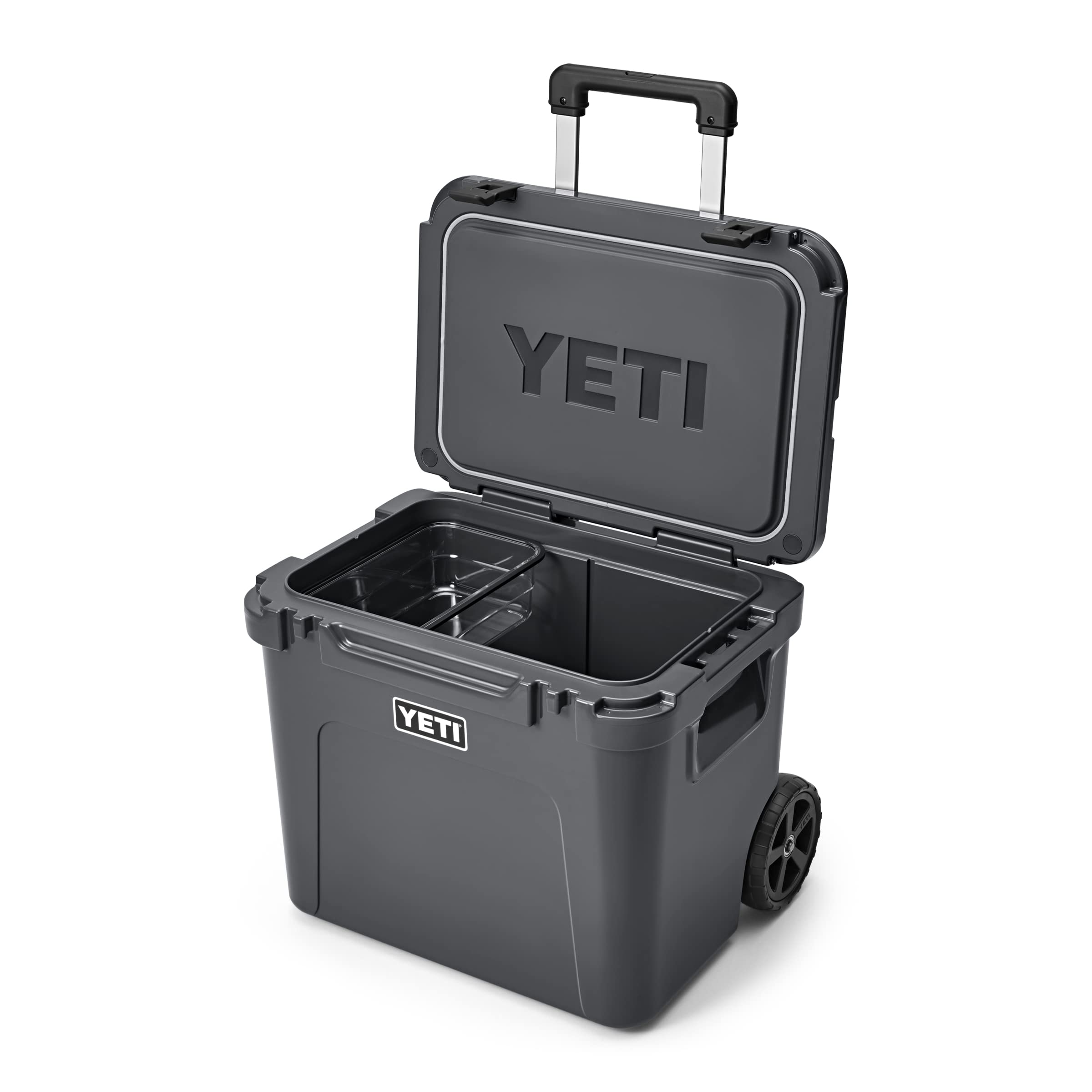
Overall Score: 86/100 | Insulation 9.3 | Moving & Lifting 8.4 | Packable Space 7.3 | Ease of Use 9.5
This design comes with some nice upgrades.
The handles are different from older Yeti models, and the lid opens easily.
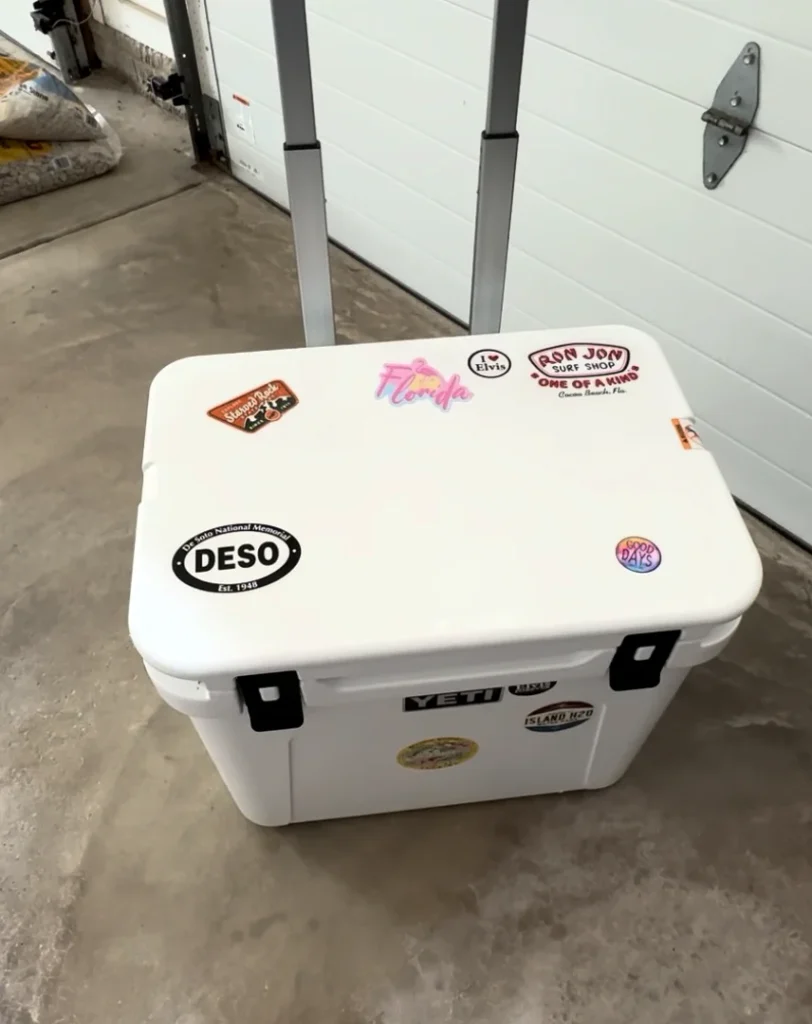
Inside, there’s a tray for dry goods, so snacks and supplies stay separate from the ice and drinks.
You can also get a center divider rack to help organize food and drinks on longer trips.
The cooler does a great job keeping ice cold. Yeti ice packs fit well at the bottom, and the lid’s seal is tight enough that some people say their ice stays fresh for more than a week.
The trick is to pre-cool the cooler, add ice for the first day, then replace it with a fresh batch. This method helps the cooler stay cold longer than most others.
The Roadie 60 is a larger version of the 48, made to carry food and drinks for a group. In our tests, it kept food cold for over 6 days and held almost 100 cans, making it one of the best on this list. Its two wheels and retractable handle make it easy to roll, even over uneven ground.
A few practical notes:
- The storage rack isn’t included with the base cooler, so budget for that separately if you want the extra organization.
- The 4 lb ice packs are a good reference point for how much cooling capacity you’re working with inside.
]The body never flexed or leaked. It also has tie-down slots for boats and trucks, a dry storage basket, and a divider that doubles as a cutting board.
Pros:
- Strong insulation
- Durable wheels
- Solid build
- Easy latches
Cons:
- Expensive
- Heavy when loaded
Best for: Families, tailgates, or multi-day trips where you need both size and long ice life.
Overall, this cooler holds up well in various environments, from sandy areas to campsites. Strong ice retention, smooth rolling wheels, and thoughtful storage options make the Roadie 60 a solid upgrade pick for anyone moving up from an older Yeti cooler.
3. Rovr RollR 60 — Best for Rough Terrain
The Roller 60 holds 60 quarts and can pack in up to 72 cans with ice, so it’s built for real group trips, not just a day at the park. The wheels are a big deal here too. They’re 9 inch inflatable tires, basically bike tires, paired with a solid steel axle and stainless steel bearings. That setup should handle sand, gravel, and rough trails without much trouble.
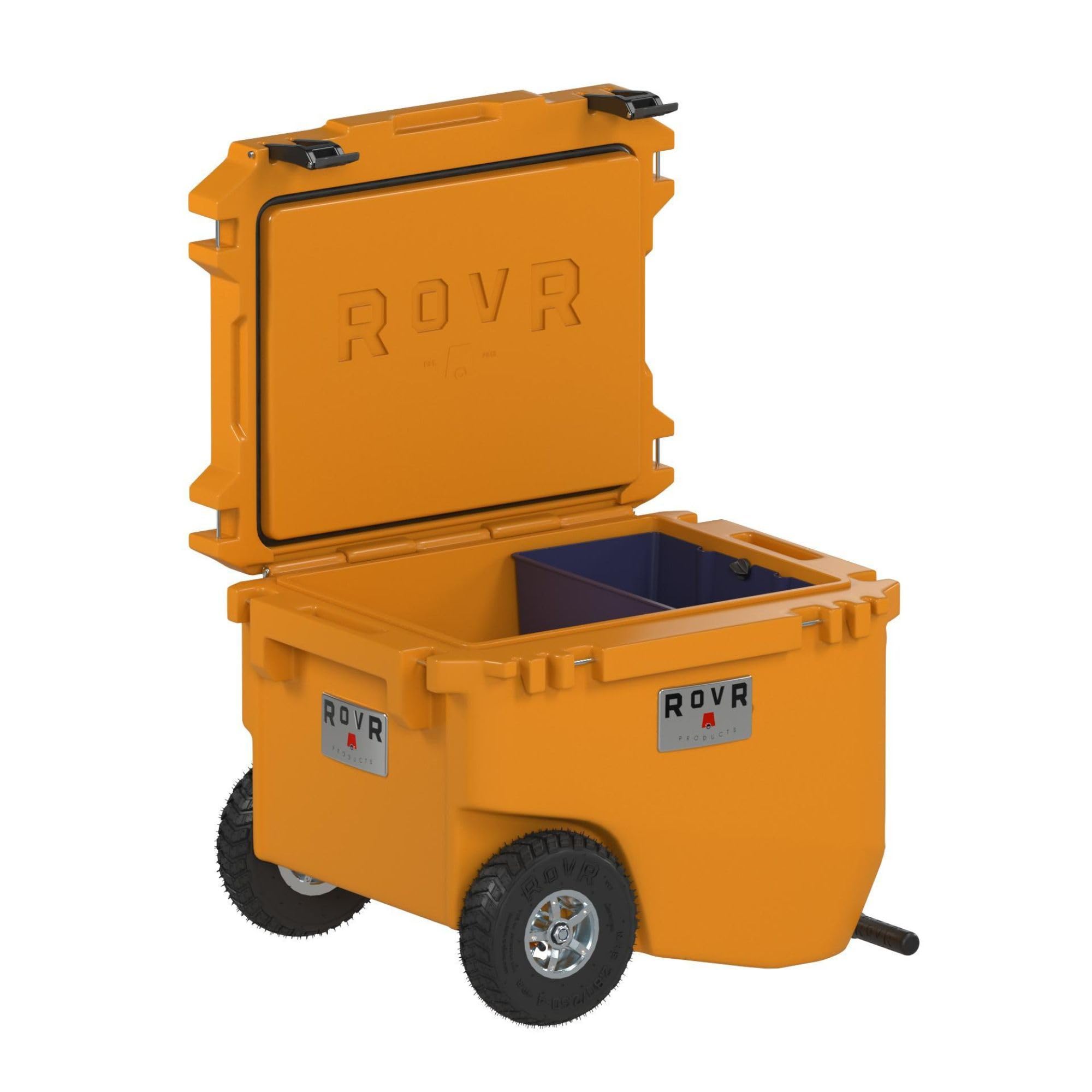
Overall Score: 79/100 | Insulation 8.0 | Moving & Lifting 8.5 | Packable Space 6.5 | Ease of Use 8.0
The latch system has been updated for 2025. The new rapid lock latch opens quickly but still locks securely, keeping an airtight seal so your ice stays frozen for days. Inside, the deep freeze-dry bin is a great feature. It keeps wine bottles upright, fruit fresh, and vegetables crisp, all in a separate space away from the ice.
You’ll need a pump to keep the tires inflated, and the cooler is heavy and bulky to store between trips. The carry handles also felt uncomfortable when the cooler was fully packed.
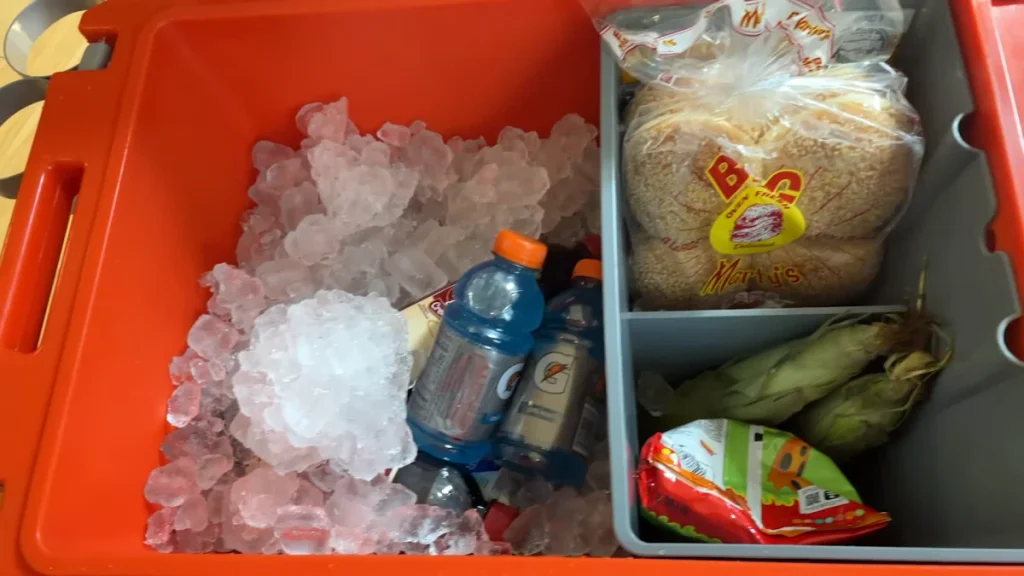
One of the best things about this cooler is how customizable it is.
The essentials kit includes,
- a cutting board,
- double cup holder,
- rod or umbrella holder,
- and a bag for your keys and phone.
- There’s also the lander bin,
- an expandable add-on that attaches to the top with Velcro and gives you more space for dry goods, towels, or clothes.
When you’re finished, it folds flat on top of the cooler for easy storage.
Here are a few more things to know.
- Every Roller 60 has a built-in bike attachment point, so you can connect it to a bike with the optional biker kit.
- The dual moto grip handle is set off to the side, making it comfortable to pull without hitting your legs.
If you care about color, there are six choices, including matcha green, coral red, and copper brown.
Pros:
- All-terrain tires
- Solid multi-day ice life
- Sturdy handle
- Mounting points for accessories
Cons:
- Heavy
- Takes up storage space
- Tires need air
- Stiff carry handles
Best for: Beach trips, hunting camps, or any spot you have to roll a cooler over sand or rocks.
Overall, this cooler is made for people who want more than just a place to keep things cold. With sturdy wheels, a tight seal, and lots of add-ons, the Roller 60 is a great choice for anyone looking to customize their setup for camping, beach trips, or tailgating.
4. Yeti Tundra Haul — Best for Boat or Truck Bed Use
The cooler has a deep interior, so you can fit plenty inside without awkward stacking. You can also get a divider to separate wet and dry items. This setup is especially useful for families who pack snacks, drinks, and ice together.

Overall Score: 78/100 | Insulation 8.0 | Moving & Lifting 8.3 | Packable Space 6.6 | Ease of Use 8.0
The drain plug stands out because it’s easy to open and close. This makes draining water and changing ice simple, even during a trip.
The cooler’s build quality justifies its price.
Expensive but worth it for the durability, especially with daily use at softball fields and campsites. The Tundra is also certified bear-resistant and has a place for a lock to keep kids, animals, or others out.
The Tundra Haul combines Yeti’s classic rotomolded design with a wheeled base for easy towing across docks, driveways, and boat ramps. In our tests, food stayed cold for 5.4 days, and the tall lid makes it easy to load without digging around inside.
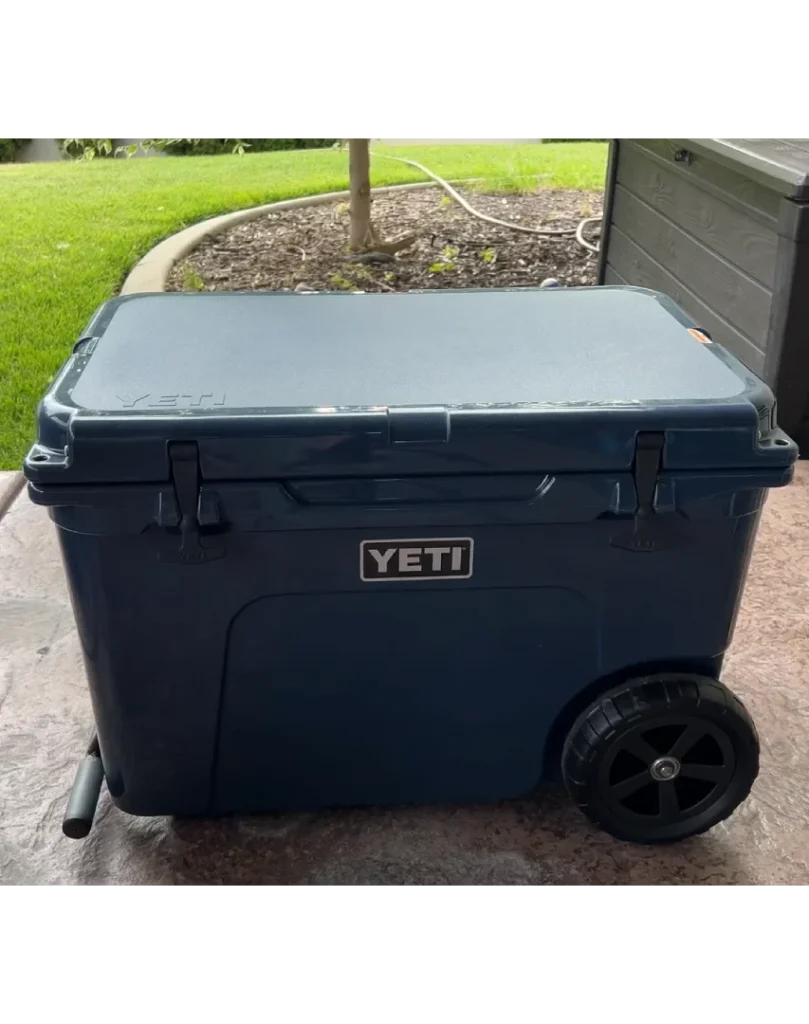
The cooler was put to the test during a long day at the softball fields in 90-degree Texas heat, from 9:30 a.m. to 8:00 p.m. It was filled with water, Gatorade, food, and a big bag of ice. After almost 11 hours and many kids opening it, plenty of ice was still left. The reviewer said it still felt cool enough that the ice probably would have lasted until the next morning.
The video suggests that for longer trips, you should pre-cool the cooler with an ice pack the day before, then drain it and add fresh ice. This extra step can help the cooler stay cold even longer.
It rolls easily on flat, hard surfaces, but pulling it across grass or loose dirt for long distances can get tiring. It’s also one of the more expensive options on this list.
Pros:
- Solid ice retention
- Easy to load
- More mobile than a standard chest
Cons:
- Tiring to pull on soft ground
- Expensive
Best for: Boat owners and anglers who need a tough cooler that rolls easily across docks and pavement.
Overall, this cooler performs well with heavy daily use and in extreme heat. Its strong ice retention, easy drain, and sturdy build make the Tundra a great choice for families who need a cooler for long days outdoors.
5. Coleman Classic Series 65 Wheeled — Best for Everyday Use
The lid has small rings that let you set drinks or other things on top without them slipping. There’s a spout up there too, which is useful if something spills or condensation forms. You can just tip the cooler and pour out the liquid instead of having to wipe it up.
The handles are designed for easy use. There’s one on the side for carrying with both hands, and another one across from the wheels. That second handle makes it much easier to pull the cooler behind you, instead of dragging it by the smaller handle at an odd angle.
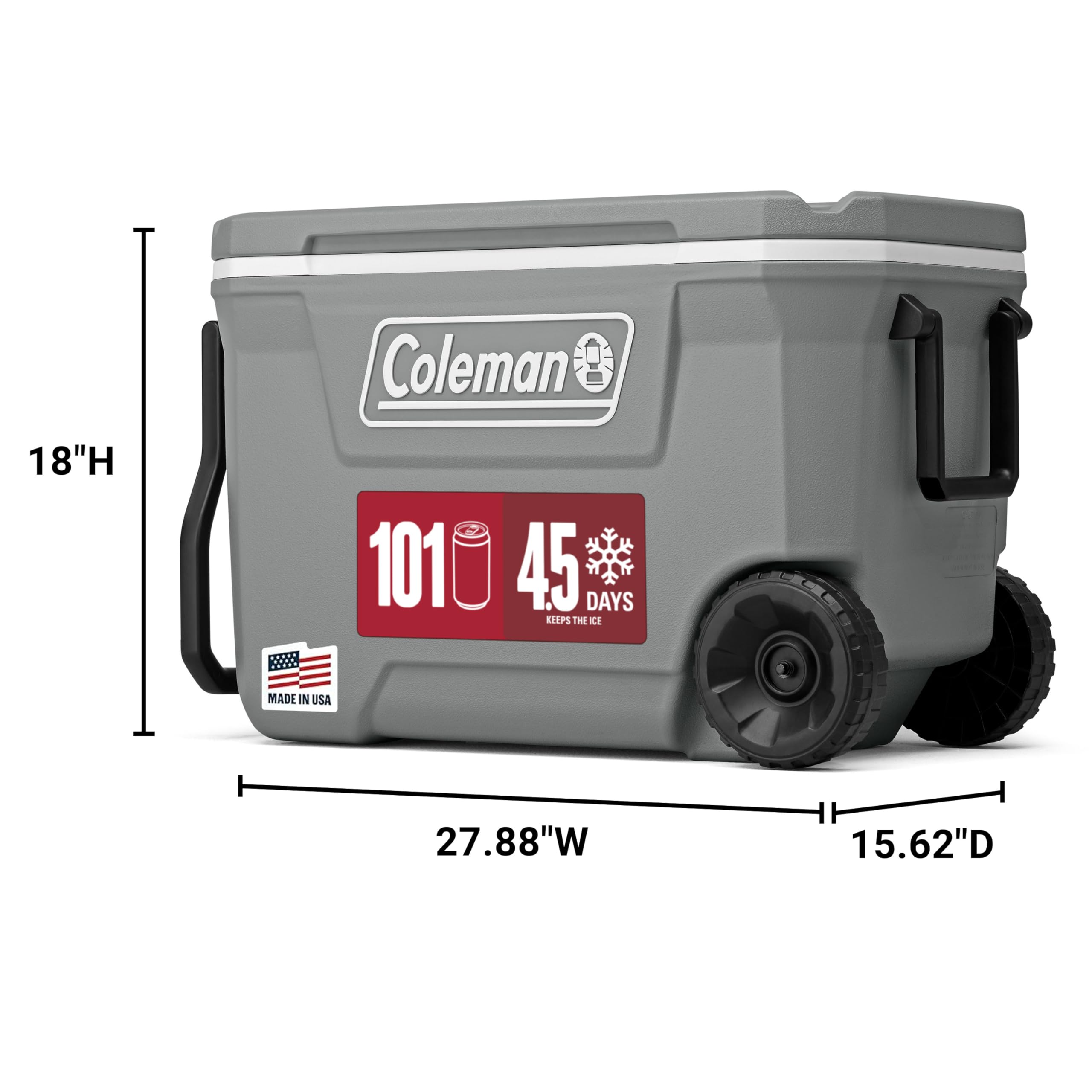
Overall Score: 70/100 | Insulation 7.0 | Moving & Lifting 7.5 | Packable Space 7.5 | Ease of Use 4.0
The cooler feels well made. There are screws in each corner on the back, and a small plastic piece keeps the lid from slamming shut. The wheels are strong, like the ones you see on a grill, and have extra plastic layers for durability. This strength is important when the cooler is full of ice, drinks, or food.

For most people, the Coleman Classic Series 65 Wheeled does everything you need for daily use. It keeps drinks cold all afternoon, holds plenty of food for a group, and costs much less than premium coolers. Testers used this one most often for everyday outings because it’s light at 13.8 pounds and has a roomy 59-liter interior.

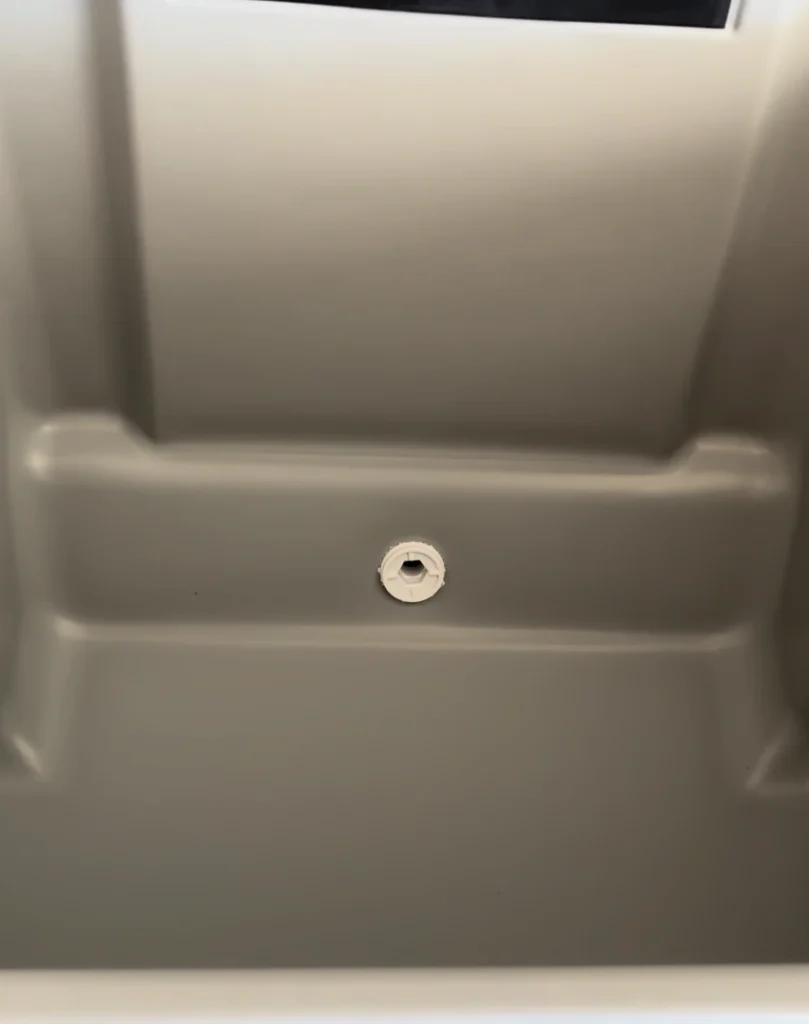
There’s a drain cap on the side to pour out melted ice or spills, and a drainage hole inside near the wheels. There’s also a second cap on the other side, but it doesn’t seem to connect to anything. I’m not sure what it’s for, but it doesn’t get in the way.
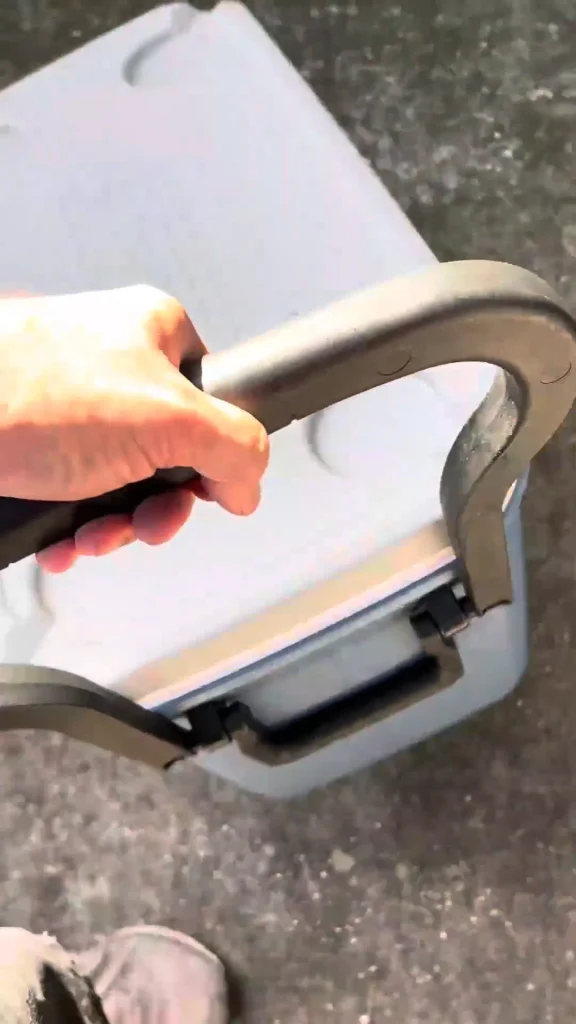
The inside is plain and practical, with no extra features. The cooler is a bit heavy, especially when it’s full, but the wheels and handles make it easy enough to move.
The tall interior can hold a wine bottle upright, and the lid supports up to 250 pounds, so it doubles as a seat when you need one. However, the lid doesn’t stay open on its own, and the small side handles can feel slippery when the cooler is full.

Pros:
- Affordable
- Rolls smoothly on pavement
- Tall interior
- Doubles as a seat
Cons:
- Lid falls shut on its own
- Small handles
Best for: Beach days, backyard cookouts, and anyone who wants strong daily performance without the premium price.
Overall, this cooler is well built and easy to use without being complicated. The strong wheels, handy spout, and extra handle make it a good choice if you want a reliable, heavy-duty cooler.
6. Coleman Xtreme 50 with Wheels — Best Budget Wheeled Cooler
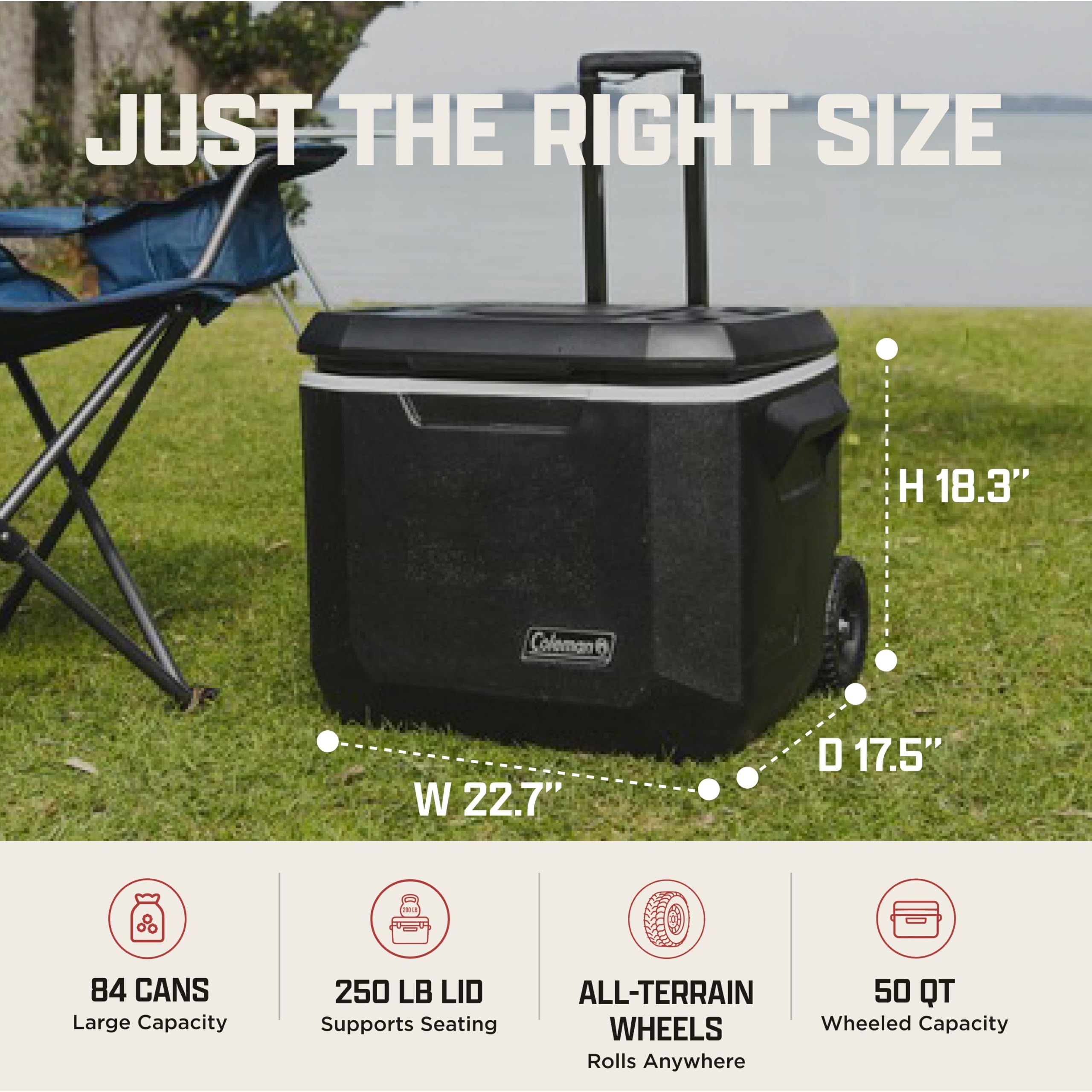
This 50-quart cooler holds up to 84 cans and has a telescopic handle like those on travel suitcases. The reviewer tested it indoors near a heating vent because the weather in their area changes too much for a fair outdoor test. While outdoor results might be different, this setup still provides a helpful baseline.
Overall Score: 68/100 | Insulation 6.2 | Moving & Lifting 8.4 | Packable Space 6.5 | Ease of Use 4.0
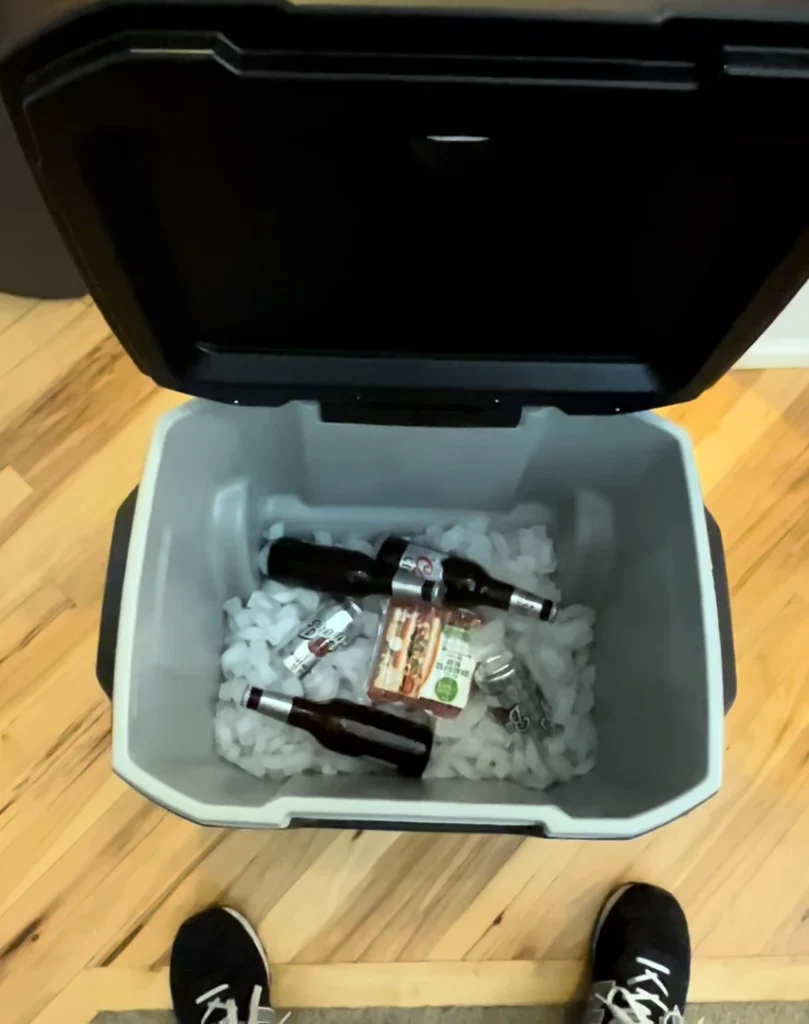
- On the first day, ice, drinks, and some food were added.
- By the second day, the ice had melted, but the water inside stayed very cold.
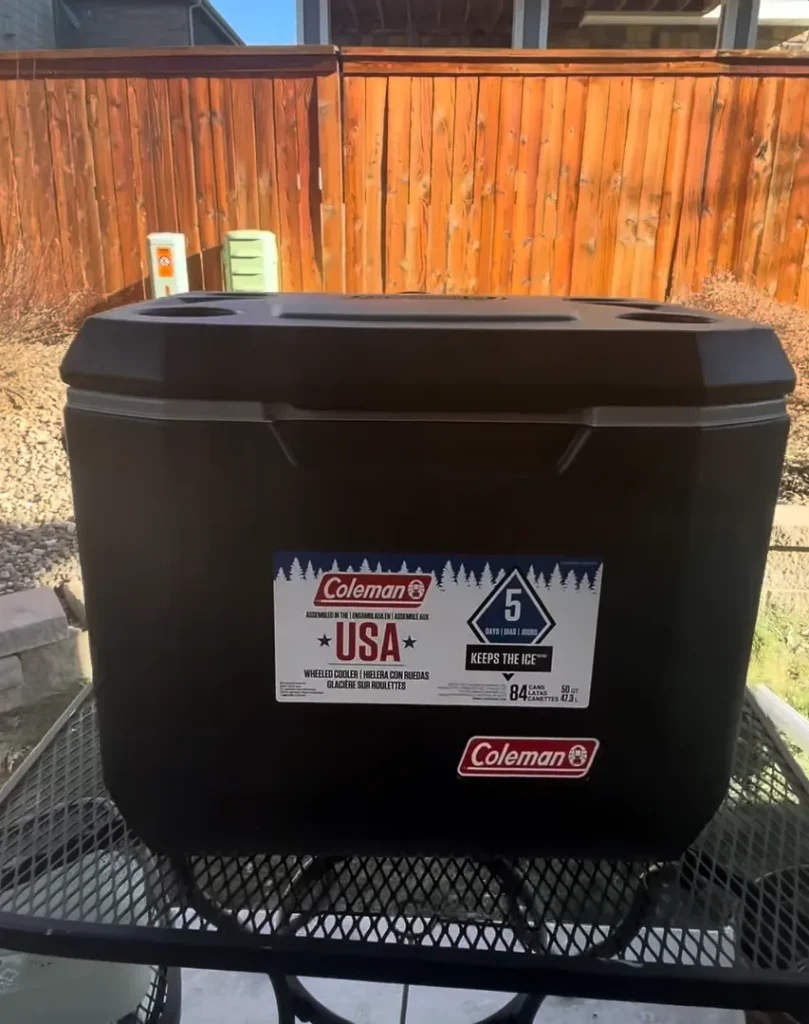
So, the ice lasted about two and a half days in warm indoor conditions. Used ice from a home freezer, not the denser ice you get from a gas station, which usually lasts longer.
With better ice and outdoor use, they think this cooler could keep ice for almost 3 days.
The build quality is good. The wheels are simple plastic, like those on a kid’s toy, but they are easy to put back on if they come off. The metal handle feels sturdy, much like a real suitcase handle, and the lid seal works well with no problems.
At 12.5 pounds empty, the Coleman Xtreme 50 is one of the lightest wheeled coolers on this list, and it still rolls over most terrain types without much trouble. The telescoping handle extends to a comfortable pulling height, and molded side handles are there for lifting when needed.
Compared side by side with a similar 48-quart cooler, the Coleman is slightly taller and about the same width, but it fits many more cans. This makes it a good choice if you want to maximize space and capacity.
Food stayed safely cold for about 4.1 days, plenty for a single beach day but not built for a long trip. The lid has no rubber seal, so water can leak out when the cooler tips or gets bumped around.
Pros:
- Light
- Affordable
- Easy to roll
Cons:
- Lid is not sealed
- Prone to leaks
- Harder to open than most
Best for: Budget shoppers who need a light, wheeled cooler for single-day outings.
Overall, for less than 50 dollars, this cooler performs well. It keeps ice for almost 3 days, feels sturdy, and has a comfortable rolling handle. It’s a smart choice for short camping trips or when you don’t need a full-size fridge.
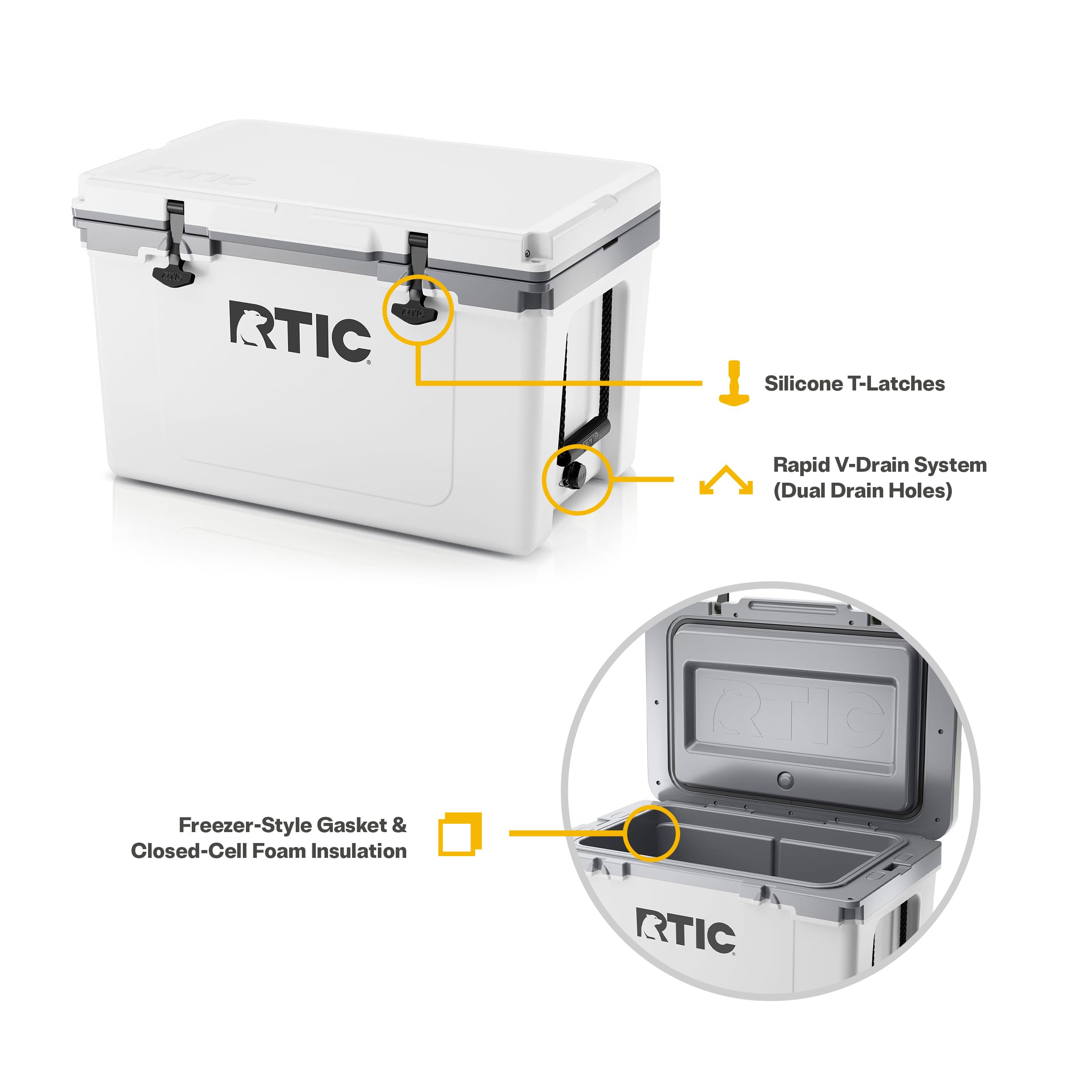
7. RTIC Ultralight 52 — Best Insulation for the Price
Arctic says this cooler is made for all types of terrain and is very lightweight. The cooler can move smoothly the entire time, thanks to a comfortable handle and wheels that kept rolling even after going through mud puddles.
For a cooler that isn’t made from a single molded piece like the Yeti Tundra, this toughness was impressive. This cooler is made from several assembled plastic parts rather than a single solid shell, making it lighter yet still strong enough to withstand rough handling.
Overall Score: 68/100 | Insulation 8.5 | Moving & Lifting 5.7 | Packable Space 5.7 | Ease of Use 7.0
Arctic claims this cooler is 30 percent lighter than competitors like the Yeti Tundra Haul. In testing, the difference was closer to 20 percent, so the marketing claim is a bit high, but the cooler is still noticeably lighter.
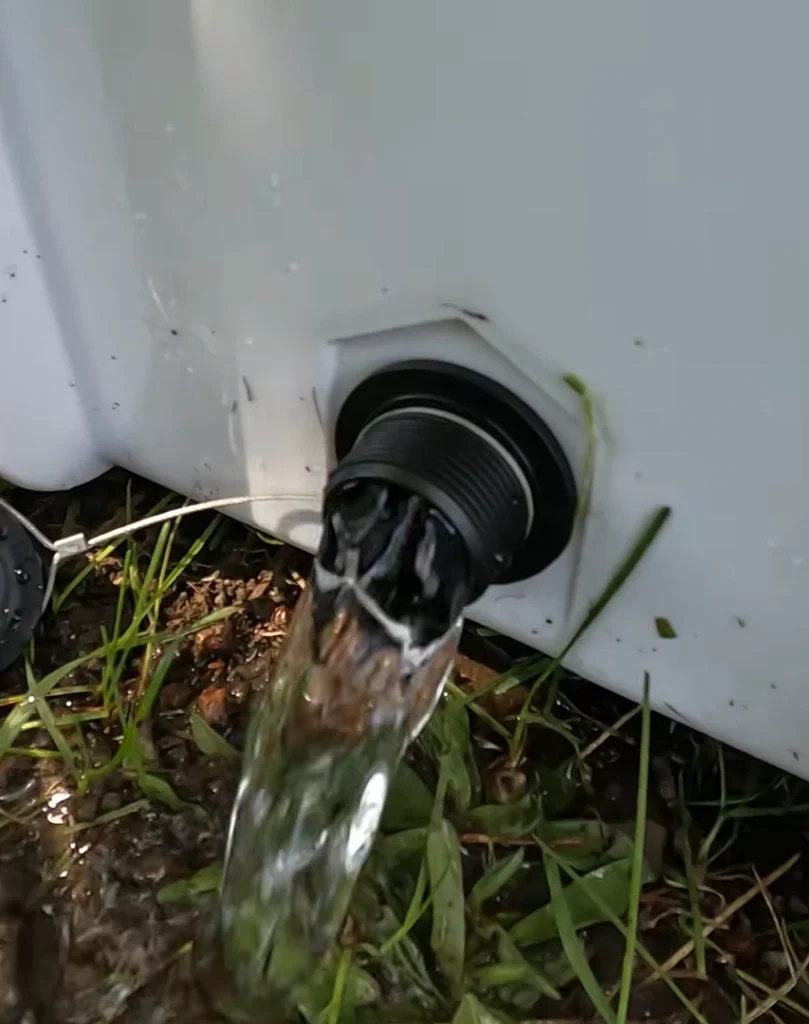
The RTIC Ultralight 52 delivers insulation close to coolers costing twice as much. Food stayed safely cold for 5.8 days in testing, and the rope handles sit high enough on the body to keep your knuckles clear of the sides while carrying. A double-drain spigot system also made draining meltwater quick and mess-free.
Some features really stood out as upgrades.
The wheels are custom-made with a slightly soft, spongy feel that absorbs shocks better than hard wheels, and the axle goes straight through the cooler to keep dirt and sand out.
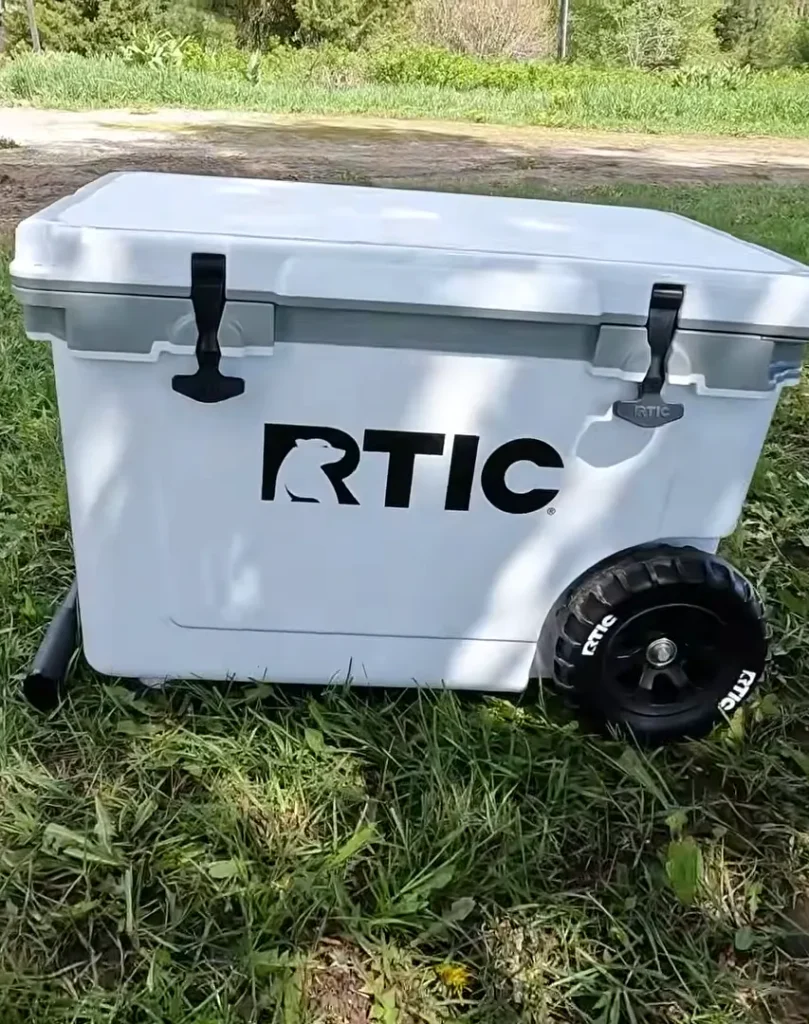
The tow handle has a soft-close feel, grippy silicone grips, and is made from powder-coated aluminum, so it feels sturdy without being heavy.
The side handles also double as tie-down points, which helps when moving it on a trailer or hitch carrier.
The latches are simple enough for kids to open and close easily. Inside, a small silicone net on the lid provides quick-access storage for snacks that don’t need to stay ice cold. This is a smart feature for anyone packing for kids.
Arctic says this cooler can keep ice for up to 7 days. A similar non-wheeled version from the same line kept ice for 6 days and kept food and drinks cold.
That’s good performance, though it’s a little less than the best roto-molded coolers. The insulation is two and a half inches of closed-cell foam, which is solid but not the thickest option.
It leaked a bit when tipped on its side during testing, suggesting the gasket doesn’t fully seal, and the hard plastic handles start to dig into your hands once the cooler is packed full. RTIC also sells the wire basket and dividers separately rather than including them.
There are a few downsides.
The cooler isn’t completely leak-proof, and water can spill out around the lid when it’s moving with a lot of liquid inside, especially over rough ground.
The drain plug has an exposed male end that can get dirty or damaged over time, and it uses a nonstandard thread size, so you can’t connect a garden hose directly without an adapter.
The warranty is only one year, which is shorter than what some competitors offer.
Pros:
- Light for its size
- Strong insulation
- Useful drain system
Cons:
- Leaks when tilted
- Uncushioned handles
- Accessories sold separately
Best for: Picnics and weekend trips where you want strong ice life without the premium price tag.
Overall, this cooler handled a real durability test better than expected, rolled smoothly across a wide range of terrain, and kept ice cold for close to a week in a related model.
Between the tough build, thoughtful handle and wheel design, and solid ice retention, this is a strong pick for anyone who wants a wheeled cooler that can take a beating without costing as much as the top-tier competitors.
8. RTIC Ultra-Light 22 — Best Compact Cooler
The handle really stands out. You can adjust it and wear it over your shoulder, so carrying the cooler is much easier than with a regular side handle. For its size, it feels light and easy to move, even before you fill it.

Overall Score: 65/100 | Insulation 5.2 | Moving & Lifting 9.2 | Packable Space 3.5 | Ease of Use 8.0
There’s a lot of space inside.

I fit an ice pack on the bottom and 16 water bottles, with room left for more ice if needed. That’s a good amount for a cooler this size, especially for a day trip or a small outing when you don’t need a full-size cooler.
Built for solo trips and lunchbox duty, the RTIC Ultra-Light 22 comes in a wide range of colors and is easy to carry thanks to a padded shoulder strap. A hidden silicone pocket under the lid stores small items such as utensils or snacks, and the entire unit locks for added security.
The drain plug is easy to reach and use, so getting rid of melted ice or water is quick and simple.
Ice life runs shorter than the larger coolers on this list, with food staying safely cold for 3.4 days, which fits its role as a grab-and-go box rather than a multi-day hauler.
One thing to note: even though it’s called ultra light, the cooler feels pretty heavy once you fill it with water and bottles. That’s normal since water is heavy, but it’s something to remember if you plan to carry it a long way when it’s full.
Pros:
- Very portable
- Wide color selection
- Useful hidden storage
Cons:
- Shorter ice life
- Pricey for its size
Best for: Solo outings, work lunches, and short day trips where space is not a priority.
Overall, this cooler feels sturdy and well-made. The shoulder strap handle is actually useful, and it holds a lot for its size. It’s a great choice if you need to carry about 20 bottles for a short trip; just be ready for it to get heavier when it’s full.
9. Yeti Roadie 24 — Best Small Personal Cooler with Wheels
The latches work smoothly, and the inside has a good amount of space for a small cooler. You can fit a bottle of wine with room for about 6 in total, and a four-pound Yeti ice brick fits perfectly with space left for a few more things. I was able to fit a wine bottle and a cheese board setup, but it gets a bit cramped if you stack items near the top.

Overall Score: 65/100 | Insulation 6.4 | Moving & Lifting 8.4 | Packable Space 2.7 | Ease of Use 8.0
This cooler fits easily in a car’s passenger seat, so it’s a great choice for quick trips or picnics.
The Roadie 24 shrinks Yeti’s rotomolded build into a size built for one or two people. It carries well with either the shoulder strap or the molded side handles, and the latches open and close with almost no effort. Insulation performance holds up well for its size.
There are a few downsides.
Since there’s no drain plug, you have to tip the whole cooler to pour out melted ice instead of draining it from the bottom. It’s not as convenient, but for short trips of a day or two, it’s an acceptable trade-off.
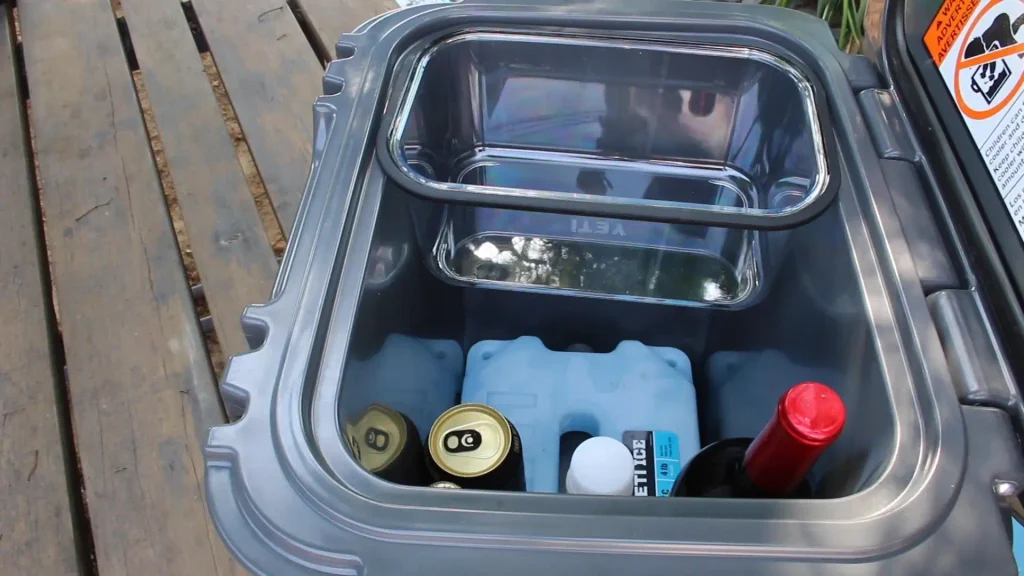
Interior space is tight, so this isn’t the cooler for a family cookout. The handle can also get in the way when trying to fully open the lid.
The size is also limited.
This cooler isn’t meant to hold much food or drink, so if you need more space, choose a bigger model. It’s pretty heavy for its size, weighing almost 13 pounds when empty.
With ice and drinks, it can weigh over 30 pounds, which is important if you have to carry it far, like across a beach. The carry strap is sturdy, but it doesn’t sit on your shoulder like a backpack cooler, so carrying it far feels more like carrying a box.
Pros:
- Sturdy build
- Easy latches
- Good insulation for its size
- Several ways to carry it
Cons:
- Small interior
- Handle blocks full lid opening
Best for: Solo travelers or couples who want Yeti-level durability in a smaller package.
Overall, this cooler is a good smaller option to use with a larger Yeti cooler. It holds enough food and drinks for two people, and it’s great for keeping delicate items like eggs or utensils safe and dry on a camping trip. The build quality is what you’d expect from Yeti, even though the size and weight make it better for shorter trips.
10. Yeti Roadie 15 — Best Ultra-Light Personal Cooler
Yeti’s smallest hard cooler stands out because of its compact size. It can hold up to 22 cans with 16 pounds of ice, weighs just under 10 pounds when empty, and fits easily on a truck floor or between two car seats. The space savings compared to a larger Tundra made this my go-to cooler for day trips, overnight stays, and baseball games with the kids.

Overall Score: 64/100 | Insulation 5.1 | Moving & Lifting 9.8 | Packable Space 2.1 | Ease of Use 7.5
The latch system deserves praise. You can open and close it with one hand, which is really helpful on road trips or whenever you need quick access. Even my five- and three-year-old kids could use the latch easily, which shows how much simpler it is than the old rubber handle designs.
The build quality is solid throughout.
Both the handle and shoulder strap have good stitching and padding. You can use the strap as a regular handle or carry it over your shoulder, depending on what works best. The strap also detaches with a simple twist, making storage or swapping easy.
There’s a drain plug, which might seem unnecessary for a cooler this small, but it’s actually handy for draining melted ice without having to tip the whole thing over. The top has non-slip material that’s strong enough to stand on, and the bottom has rubber feet to keep it steady on uneven ground.
Ice retention was impressive, even in real heat.
At a baseball tournament in 95-degree Florida weather, the cooler sat outside from 9 a.m. to 6 p.m. without any melting.
The ice stayed solid overnight and lasted into the next afternoon, so total ice life was about 35 hours in tough conditions, with just one ice pack refreshed partway through.
At just 9.7 pounds empty, the Yeti Roadie 15 was the easiest cooler on this entire list to carry. The adjustable shoulder strap makes it comfortable over long walks, and it is compatible with dry ice for extended trips where a small footprint matters more than capacity.
Interior room is limited, closer to a large lunchbox than a family cooler, and food only stayed safely cold for 3.4 days in testing. You pay a premium for the size and the Yeti name here.
There are a couple of downsides.
Yeti doesn’t make an ice pack that fits this cooler exactly, so standard packs don’t sit flush and can make packing uneven.
Thinner packs seem to fit better, but you’d have to buy those separately.
Also, the white top can pick up light scuffs over time, though other colors probably hide them better.
In a capacity test, It fits 5 canned drinks, 5 seltzers, 2 water bottles, some protein bars, and an ice pack, with room left for more ice on top. That’s a lot of storage for such a compact cooler.
Pros:
- Extremely light
- Comfortable strap
- Dry-ice compatible
Cons:
- Very little interior space
- Shorter ice life
- Premium price for the size
Best for: Hikers, anglers, or anyone who needs a small cooler light enough to carry all day.
Overall, this cooler keeps ice well, has the quality you expect from Yeti, and is much easier to move in and out of a car than a full-size cooler. For day trips, overnight camping, or anyone who wants a hard cooler that’s easy to carry, this is a great choice.
How to Choose the Right Cooler for You
1. How Much Ice Life Do You Actually Need
You’ll need a different cooler for a backyard barbecue than for a five-day backcountry trip. If you can restock ice daily, a lighter and cheaper model like the Coleman Xtreme 50 works well. For multi-day trips without fresh ice, go for a rotomolded cooler like the Yeti Roadie 48 or RTIC Ultralight 52, which kept food cold for almost a week in our tests.
2. Rotomolded vs. Standard Construction
Standard coolers have plastic walls with foam in the middle. Rotomolded coolers are made from one solid piece of heat-molded plastic around the foam, which keeps cold air in better and makes them tougher. This process costs more, so rotomolded coolers like Yeti and RTIC are pricier than standard ones like Coleman.
3. Wheels, Straps, or Handles
Choose the right way to carry your cooler for your trip. Wheeled coolers like the Yeti Roadie 60 or Coleman Classic Series 65 are great for pavement, campgrounds, and docks. All-terrain wheels, like those on the Rovr RollR 60, work much better on sand and gravel. For solo trips, a compact cooler with a shoulder strap is easier than dragging a big chest.
4. Planning a Trip Into Bear Country
Some coolers on this list, including the RTIC Ultra-Tough 45 and Engel 65, carry certification from the Interagency Grizzly Bear Committee. That certification confirms the cooler meets minimum bear-resistance construction standards, though it does not guarantee a bear cannot open or damage it. Bear-resistant locks are usually sold separately and required to meet the certification in practice, so check local regulations for your destination before relying on a cooler alone to store food in bear country.
Frequently Asked Questions
How does cooler insulation affect food safety?
Food safety guidelines recommend keeping perishable food below 40°F. Coolers with rubber gasket seals and thick rotomolded walls, like the YETI Roadie 48, can hold safe temperatures much longer than standard foam-core coolers.
Why do rotomolded coolers cost more than standard coolers?
Rotomolded coolers use a more expensive manufacturing process that fuses plastic around a thick foam core. This improves durability and ice retention. The extra materials and labor are the main reasons a rotomolded cooler can cost three to five times more than a standard cooler of a similar size.
Are wheeled coolers good for sand and gravel?
Standard wheels can sink or drag in sand and loose gravel. Coolers with larger, air-filled tires, such as the Rovr RollR 60, handle rough terrain much better than the smaller hard wheels found on budget models.
Are ice packs better than loose ice for coolers?
Loose ice generally cools a cooler faster and keeps a lower overall temperature because it surrounds food and drinks directly. Ice packs melt more slowly and create less mess, making them a good choice for shorter trips where a dry interior matters more than maximum cooling.
Is block ice better than cubed ice for coolers?
Block ice melts more slowly than cubed ice because it exposes less surface area to warm air. A mix of both works well for most trips. Place block ice on the bottom for long-lasting cold and cubed ice on top for quick access to drinks.
What is the best way to pre-chill a cooler?
Fill the cooler with ice or ice packs a few hours before loading it with food and drinks. Pre-chilling cools the interior walls first, helping the cooler hold ice longer because the walls are not absorbing heat from a warm interior.
How long does a hard-sided cooler last?
A quality rotomolded cooler can last 10 years or more with normal use. Its thick shell resists cracking, and the foam core does not break down quickly. Standard foam-core coolers tend to wear out faster, often lasting about 3 to 7 years depending on use.
How should you store a cooler between trips?
Clean and fully dry the cooler before storing it for a long period. Leaving the lid slightly open allows air to circulate, which helps prevent mold, mildew, and odors from building up inside.
How do you get rid of bad odors from a cooler?
Scrub the interior with warm water and baking soda to remove most food and mildew odors. For stubborn smells, a diluted bleach solution can help. Rinse the cooler thoroughly, then let it dry completely in open air.
Can you take a cooler as checked baggage on an airplane?
Most empty hard-sided coolers can be checked as luggage on domestic flights, although larger models may have oversized baggage fees. Ice and dry ice have separate airline rules, so check directly with the airline before packing a cooler for a flight.
Can you use dry ice in a cooler?
Dry ice keeps food frozen much longer than regular ice, but it releases carbon dioxide gas as it turns into vapor. Use it only with a cooler that allows proper ventilation and follow the manufacturer’s guidance. A tightly sealed cooler can build up pressure.
How much weight can a cooler hold on its lid?
Weight limits vary by cooler model. Some coolers, such as the Coleman Classic Series 65 Wheeled, are rated to hold up to 250 pounds on the lid. Lighter budget coolers may not be designed for sitting or standing. Check the specific weight rating before using a cooler as a seat or step.
What makes a cooler bear-resistant?
A cooler generally needs certification from the Interagency Grizzly Bear Committee to qualify as bear-resistant in areas that require certification. The setup may also require a separate bear-resistant lock because standard cooler latches may not meet the requirements.
Does direct sunlight make a cooler lose ice faster?
Yes. Direct sunlight heats the cooler’s exterior and can speed up ice melt, sometimes reducing ice life by a third or more compared with a shaded cooler. Using a tarp, umbrella, or reflective cover can help protect the cooler on hot, sunny days.
Can you repair a cracked rotomolded cooler?
Small cracks in a rotomolded shell can often be sealed with a marine-grade epoxy designed for plastic. Larger cracks or damage near hinges and latches may require replacement parts from the manufacturer. Structural repairs may not hold up well under repeated use.
Is it cheaper to check a cooler as luggage or ship it?
Checking a cooler as luggage is usually cheaper than shipping it separately, but airline weight and size limits apply. For coolers weighing more than 50 pounds or exceeding standard checked-bag dimensions, shipping the cooler ahead may cost less than paying airline oversized baggage fees.
Final Take
The Yeti Roadie 48 is our top pick because it kept ice the longest in our tests. If the price is too high, the Coleman Classic Series 65 Wheeled gives you most of the daily performance you need for much less. For rough terrain, go with the Rovr RollR 60, and for solo trips, the Yeti Roadie 15 or RTIC Ultra-Light 22 are light and keep your food cold until lunch.
Pick a cooler based on your trip length, the terrain, and your group size first. Then, let the price help you make your final choice.