

I take my cooler overlanding, and I know dust gets into every seam. Heat builds in a truck bed. Rough roads shake the load for hours. A weak cooler cracks, leaks, or loses ice fast. A strong cooler keeps food cold for days and still works at the next camp.
I picked the YETI Tundra 45 as the top pick in this guide. It pairs a 45-quart size with thick insulation, a rotomolded shell, and a bear-resistant build. It fits a truck bed, a back seat, or a flat spot in a cargo area. It holds enough food and drinks for two to four people on a long weekend.
This guide lists seven coolers that suit overland travel. I checked each pick on Amazon for size, weight, ice time, build, and buyer ratings. Prices in the table were checked on November 21, 2026. Amazon prices change often, so I check the link for the current price.
For a wider view of hard coolers, see the parent guide to the best ice chest coolers. For camp use in general, the best coolers for camping guide covers many of the same models in a camp setting.
Best Overlanding Coolers at a Glance
The short version. Jump to any pick for the full review.

YETI Tundra 45
Best overall overlanding cooler
Key specifications
- Best For
- Most overland drivers, multi-day trips
- My thought
- My pick for most overland drivers. It fits a truck bed and holds cold for days.
- Type
- Hard, rotomolded
- Capacity
- 45 qt, 26 cans with ice at 2:1 ratio
- Cooling / Ice Retention
- Up to 10 days in lab tests, 5+ days in heat
- Carrying
- Two-hand lift, no wheels
Reasons to buy
- Thick insulation and a tight gasket hold ice for days in heat.
- Rotomolded shell, strong latches, and tie-down slots suit rough roads.
- Bear-resistant build adds safety in bear country.
- Dry goods basket keeps dry food out of melt water.
Reasons to avoid
- No wheels, so a full cooler needs two hands to lift.
- Heavy once loaded with ice and food.
- High cost for a driver who only goes out once a year.
The size fits two to four people. It holds 26 cans with ice at a 2:1 ratio, or 54 cans with no ice. The body measures 25.75 inches long, 16.125 inches wide, and 15.4 inches high. It fits a truck bed, a rear footwell, or a flat cargo deck.
Tie-down slots sit on each side of the body. I run a strap through those slots to hold the cooler still on washboard roads. Non-slip feet grip a bed liner. The lid takes weight as a seat or a step. The Interagency Grizzly Bear Committee certifies the cooler as bear-resistant when the right padlocks are in place. That fact matters for camp in bear country. The IGBC list of bear-resistant products is at bearwisejh.org.
I would choose it for
Most overland drivers. It fits a truck bed, holds cold for days, and takes rough roads.

Lifetime 55 Quart High Performance Cooler
Best budget overlanding cooler
Key specifications
- Best For
- Budget buyers, large group trips
- My thought
- My pick for a large cooler at a low cost for a group trip.
- Type
- Hard, foam-filled
- Capacity
- 55 qt, 60 cans
- Cooling / Ice Retention
- Up to 7 days, maker claim
- Carrying
- Two-hand lift, 23.4 lb empty
Reasons to buy
- Large 55-quart size for a low cost.
- Light empty weight for the size.
- Strong gasket, hinges, and latches for the cost.
- Lid works as a seat at camp.
Reasons to avoid
- Not full rotomolded, so the shell is less tough than a premium model.
- Ice time drops fast in heat above 90F.
- Some buyers report melt in 2.5 days in hard heat with no pre-chill.
The cooler has a freezer-grade gasket, stainless steel hinges, and two rubber latches that open with one hand. A drain spout fits a garden hose. A stainless steel bottle opener sits on the lid. The lid holds 300 pounds of distributed weight, so I use it as a camp seat.
I would choose it for
Budget buyers and large groups. It holds 55 quarts for less than most premium models.
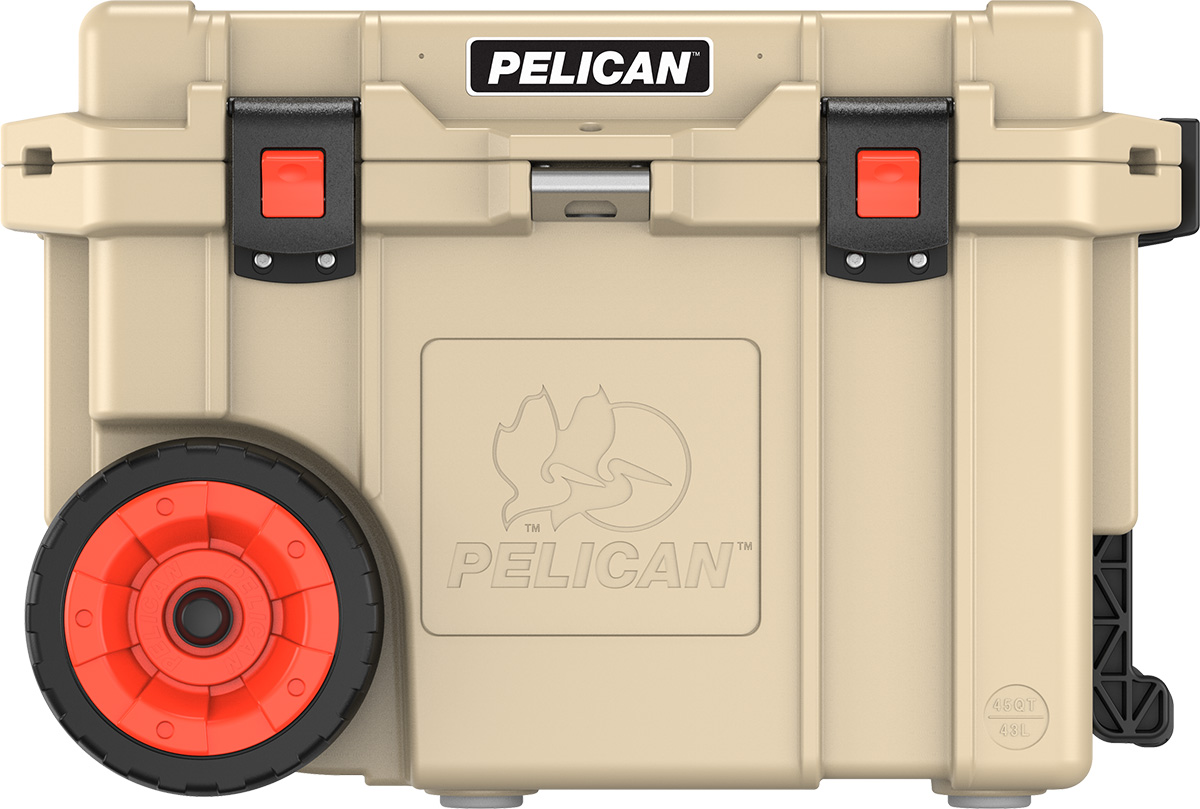
Pelican 45QT Elite Wheeled Cooler
Best premium overlanding cooler
Key specifications
- Best For
- Longest ice time and a premium build
- My thought
- My pick for the longest ice time and a premium build, if I can handle the weight.
- Type
- Hard, rotomolded, wheeled
- Capacity
- 45 qt, 34 cans with ice at 2:1 ratio
- Cooling / Ice Retention
- Up to 10 days, maker claim, lab test at 90F
- Carrying
- Wheels and trolley handle
Reasons to buy
- Thick insulation and a full gasket seal hold ice for days.
- Stainless steel hardware and strong latches suit rough use.
- Wheels and a trolley handle help on flat ground.
- Lifetime warranty and bear-resistant build add trust.
Reasons to avoid
- Heavy at 37.3 pounds empty.
- Wheels add weight and take space in a tight cargo area.
- High cost for a 45-quart cooler.
The cooler holds 34 cans with ice at a 2:1 ratio. It also has a built-in trolley handle and wheels. The wheels and handle make a 37.3-pound cooler easy for me to move on flat ground. The body is made in the USA.
The cooler is certified bear-resistant by the Interagency Grizzly Bear Committee. It has molded-in tie-downs, a sloped drain with a tethered threaded plug, and a bottle opener. A fish scale sits on the lid on some versions. The weight is the main trade. At 37.3 pounds empty, it is the heaviest cooler in this guide. I need a ramp, a second person, or a low truck bed to load it with ease.
I would choose it for
Long ice time and a premium build. It has wheels, a lifetime warranty, and a bear-resistant build.
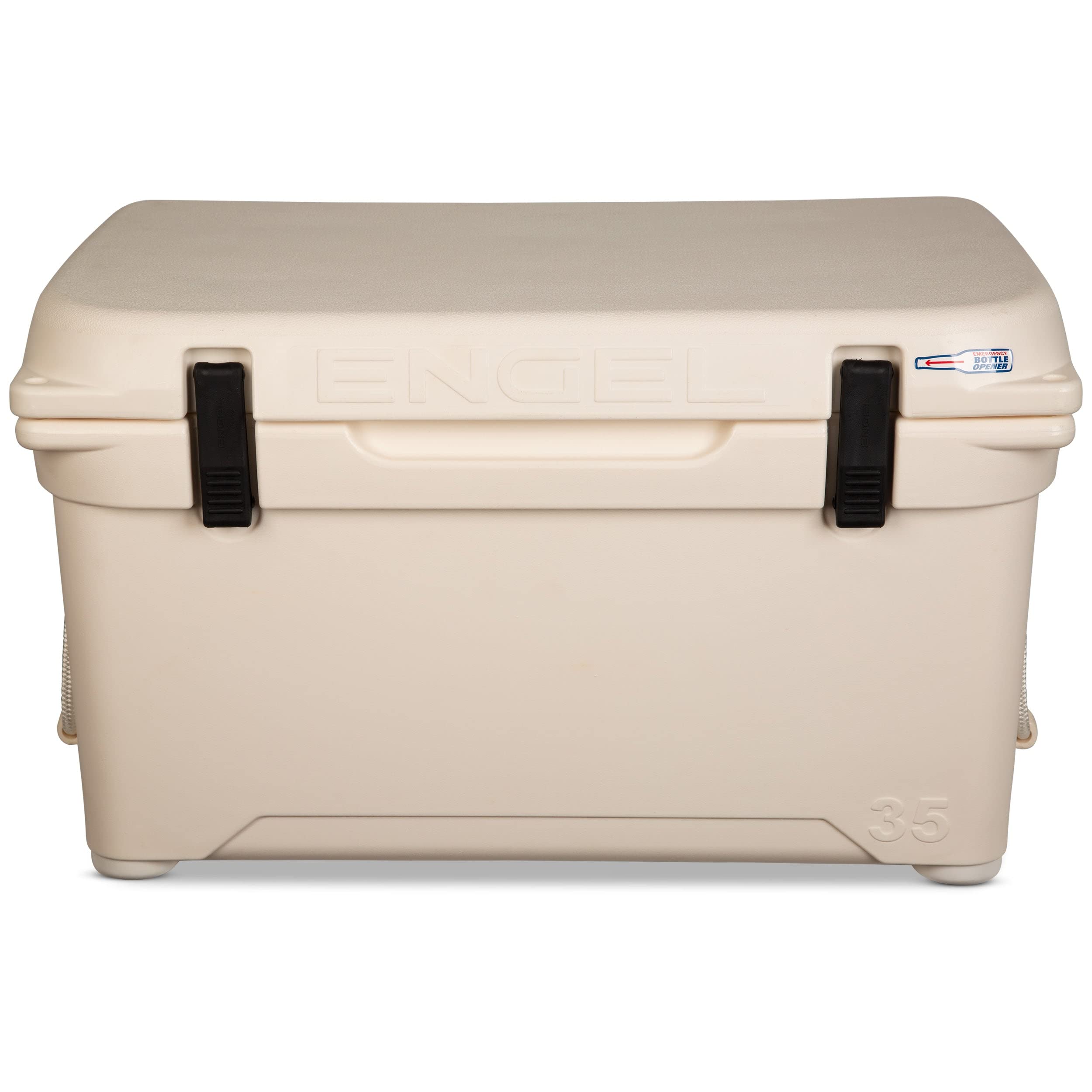
Engel ENG35
Best rough-terrain overlanding cooler
Key specifications
- Best For
- Solo drivers and pairs on rough roads
- My thought
- My pick for a tough, compact cooler on rough roads.
- Type
- Hard, rotomolded
- Capacity
- 35 qt, 36 cans
- Cooling / Ice Retention
- Up to 10 days, maker claim
- Carrying
- Two-hand lift, 22 lb empty
Reasons to buy
- Seamless shell and stainless latches take vibration well.
- Small size fits a roof rack or a tight cargo space.
- Thick foam on all sides holds cold in heat.
- Airtight lid seal keeps dust out.
Reasons to avoid
- Small size limits food for a group.
- Less ice mass than a large cooler, so lid openings cost more cold.
- No wheels, so a full cooler needs a two-hand lift.
For a solo driver or a pair on a rough route, I find the 35-quart size is a good match. It leaves room for a second cooler, a fridge, or camp gear.
The ENG35 has a vacuum valve on some versions. The valve helps the lid seal tight. The cooler has non-slip feet and a drain plug. It is a good fit for me when I run washboard roads for hours. The shell takes vibration without a rattle in the latches. The lid stays shut when the truck hits a rut.
I would choose it for
Solo drivers and pairs on rough roads. It is small, tough, and takes vibration well.

YETI Roadie 24 2.0
Best compact overlanding cooler
Key specifications
- Best For
- Solo drivers and cab use
- My thought
- My pick for cab use and as a second day cooler next to a large bed cooler.
- Type
- Hard, rotomolded
- Capacity
- 24 qt, 33 cans only, 26 lbs ice only
- Cooling / Ice Retention
- Multi-day, maker claim
- Carrying
- Shoulder strap
Reasons to buy
- Light weight and a shoulder strap make it easy to carry.
- Tall body fits bottles and cans upright.
- Rotomolded shell takes cab use and rough roads.
- Fits behind a seat or in a footwell.
Reasons to avoid
- Small size is not enough for a group or a multi-day food load.
- Thinner walls than a Tundra, so ice time is shorter.
- High cost for a 24-quart cooler.
The BestDam drain plug makes draining fast at camp. LipGrip handles sit out of the way until I need them.
This cooler suits me when I want cold drinks in the cab and a small food stash for the day. It also suits me when I already have a large cooler in the bed and need a day cooler for the cab. It is not a main cooler for a group. It is a second cooler for drinks, lunch, and snacks. The best YETI coolers guide has more YETI sizes in the same line.
I would choose it for
Solo drivers and cab use. It is light, fits behind a seat, and works as a second cooler.
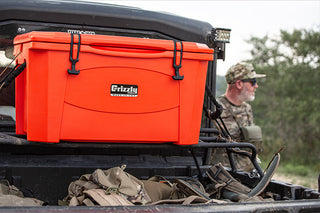
Grizzly 60
Best high-capacity overlanding cooler
Key specifications
- Best For
- Groups of four to six, multi-day trips
- My thought
- My pick for a large group that needs 60 quarts in a truck bed.
- Type
- Hard, rotomolded
- Capacity
- 60 qt, 72 cans with 20 lbs ice
- Cooling / Ice Retention
- Not verified, see review
- Carrying
- Tie-down points, non-slip feet
Reasons to buy
- Large 60-quart size for groups and base camps.
- Rotomolded build, strong latches, and tie-down points suit truck beds.
- Bear-resistant build with padlock points.
- Lifetime warranty from the maker.
Reasons to avoid
- Large size needs a measured fit in the vehicle.
- Full weight needs two people to lift with ease.
- Ice time and weight were not verified on the Amazon page found.
Ice time for the Grizzly 60 was not verified on the Amazon page found in search. The Grizzly 40, a smaller model in the same line, has test results near five to seven days in mild temps. The Grizzly 60 has more ice mass than the 40, so it should hold cold at least as long with the same pack method. I treat that as a guide, not a promise. I use a pre-chill, block ice, and a 2:1 ice-to-contents ratio for the best result. The guide on how to make ice last longer has ten steps that work well for a large cooler.
I would choose it for
Groups of four to six on a multi-day trip. It holds 72 cans in a rotomolded build.
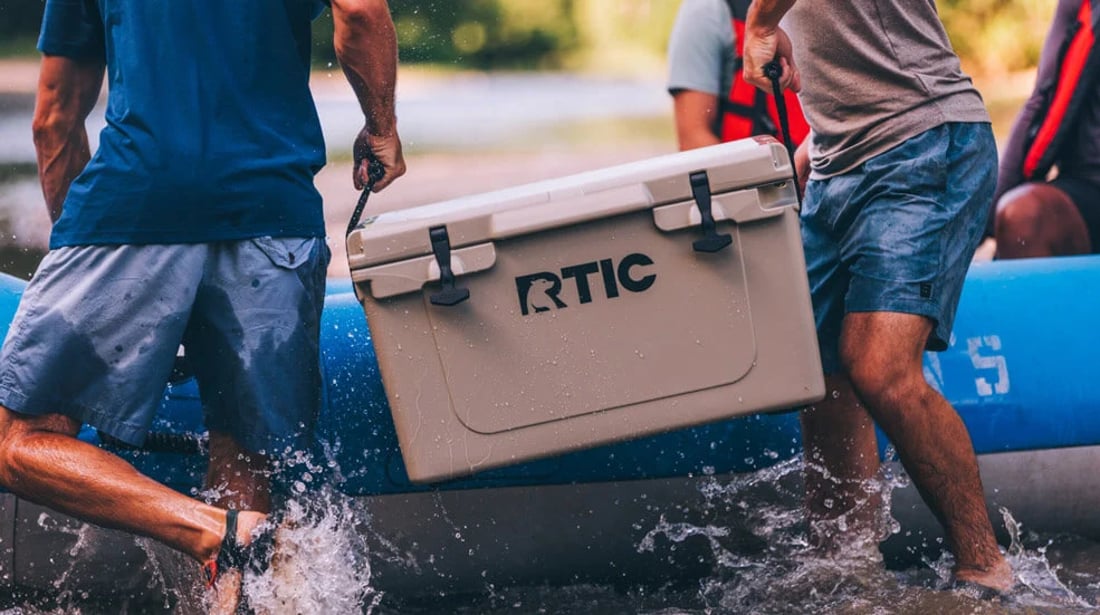
RTIC 45 QT Ultra-Tough
Best value overlanding cooler
Key specifications
- Best For
- Value buyers, multi-day trips
- My thought
- My pick for a large rotomolded cooler at a lower cost than YETI.
- Type
- Hard, rotomolded
- Capacity
- 45 qt, 60 cans, 41 lbs ice
- Cooling / Ice Retention
- Up to 5 days, maker claim, 4-5 days in tests
- Carrying
- Rope handles, tie-down slots
Reasons to buy
- Large 45-quart size and 60-can capacity for a lower cost.
- Rotomolded build with tie-down slots for a truck bed.
- Good ice time for a long weekend.
- Two drain plugs make draining fast.
Reasons to avoid
- Heavier than the YETI Tundra 45 in most roundups.
- Weight varies by listing, so check the exact model.
- Not IGBC certified, unlike the YETI Tundra 45.
The RTIC is heavier than the YETI in most roundups, at 29.5 pounds empty. One Amazon listing for the same model lists 21.1 pounds. That weight gap is a flag. I check the Amazon listing for the exact model and color before I buy. The size and ice time are the same in both sources.
I would choose it for
Value buyers who want a large rotomolded cooler for multi-day trips. It matches the Tundra 45 in size for less money.
These are the seven coolers I compared for overlanding. I picked them because they cover different sizes and builds, from a small cab cooler to a large cooler for a group.
Compare Our Picks
Key specifications side by side.
| Specs | |||||||
|---|---|---|---|---|---|---|---|
| Our score | 9.2/10 | 9.1/10 | 8.7/10 | 8.5/10 | 9.2/10 | 8.1/10 | 7.9/10 |
| Price | 325 | 190 | 450 | 249.99 | 250 | — | 239 |
| Best For | Most overland drivers, multi-day trips | Budget buyers, large group trips | Longest ice time and a premium build | Solo drivers and pairs on rough roads | Solo drivers and cab use | Groups of four to six, multi-day trips | Value buyers, multi-day trips |
| My thought | My pick for most overland drivers. It fits a truck bed and holds cold for days. | My pick for a large cooler at a low cost for a group trip. | My pick for the longest ice time and a premium build, if I can handle the weight. | My pick for a tough, compact cooler on rough roads. | My pick for cab use and as a second day cooler next to a large bed cooler. | My pick for a large group that needs 60 quarts in a truck bed. | My pick for a large rotomolded cooler at a lower cost than YETI. |
| Type | Hard, rotomolded | Hard, foam-filled | Hard, rotomolded, wheeled | Hard, rotomolded | Hard, rotomolded | Hard, rotomolded | Hard, rotomolded |
| Capacity | 45 qt, 26 cans with ice at 2:1 ratio | 55 qt, 60 cans | 45 qt, 34 cans with ice at 2:1 ratio | 35 qt, 36 cans | 24 qt, 33 cans only, 26 lbs ice only | 60 qt, 72 cans with 20 lbs ice | 45 qt, 60 cans, 41 lbs ice |
| Cooling / Ice Retention | Up to 10 days in lab tests, 5+ days in heat | Up to 7 days, maker claim | Up to 10 days, maker claim, lab test at 90F | Up to 10 days, maker claim | Multi-day, maker claim | Not verified, see review | Up to 5 days, maker claim, 4-5 days in tests |
| Carrying | Two-hand lift, no wheels | Two-hand lift, 23.4 lb empty | Wheels and trolley handle | Two-hand lift, 22 lb empty | Shoulder strap | Tie-down points, non-slip feet | Rope handles, tie-down slots |
How I Picked These Overlanding Coolers
Overland coolers need more than cold walls. I need them to ride well, stay shut, and hold up after miles of washboard road. I used four tests for each pick: ice retention, size and weight, durability, and value.
1. Ice Retention
Ice time sets the pace for a trip. A cooler that holds ice for five to seven days lets me skip town stops. A cooler that loses ice in two days forces extra stops and extra cost. I checked maker claims against lab tests and buyer reports from 2026 roundups. The ice retention guide and the insulation guide show the gap between lab claims and real-world use.
2. Size and Weight
Size must match the vehicle and the group. I find a 45-quart cooler suits two to four people for a long weekend. A 55-quart or 60-quart cooler suits a larger group or a longer trip. A 24-quart cooler suits one driver or a day cab. The cooler size guide has a chart by group size and trip length. The ice calculator helps with ice amounts for a set size.
3. Durability
I look for a rotomolded shell that takes hits that crack thin plastic. I look for strong latches, a molded hinge, and a tight gasket that keep dust out. I look for tie-down slots and non-slip feet that hold the cooler still on rough roads. The rotomolded vs traditional cooler guide covers the build difference.
4. Value
Value means cold time and build life for the cost. I mixed low-cost, mid-cost, and high-cost picks in this guide. The budget vs premium coolers guide covers the same trade in more detail.
What Size Overlanding Cooler Do I Need?
I match the size to the vehicle, the group, and the trip length. I measure the bed, the rack, and the cargo deck before I buy.
Small Coolers
Small coolers run 24 to 35 quarts. The Roadie 24 and Engel 35 fit this size. I use one for a solo driver or a pair on a weekend. A small cooler fits a cab, a footwell, or a narrow cargo deck.
Medium Coolers
Medium coolers run 35 to 45 quarts. The Engel 35, Tundra 45, and RTIC 45 fit this size. I use one for a pair on a long weekend. A 45-quart cooler fits a mid-size truck bed and a large SUV cargo area.
Large Coolers
Large coolers run 55 to 60 quarts. The Lifetime 55 and Grizzly 60 fit this size. I use one for a group of four to six on a multi-day trip. A 60-quart cooler fits a full-size truck bed and a base camp. For dry ice use, I read the dry ice guide first.
Overlanding Cooler Features I Look For
I check four features before I buy. Each one matters on a rough road.
Vibration and Rough-Terrain Durability
Rough roads shake a cooler for hours. I look for a rotomolded shell that takes that shake without a crack. I look for a molded hinge that lasts longer than a pin hinge. I look for strong latches that keep the lid shut on ruts and washboard. I look for non-slip feet that stop the cooler from sliding on a metal bed. I look for tie-down slots that let me strap the cooler to a bed rail.
Roof Rack and Truck Bed Mounting
I measure the bed, the rack, and the cargo deck before I buy. A 45-quart cooler fits most truck beds with room to spare. A 60-quart cooler needs a full bed width and a low load height. A roof rack needs a low, wide cooler with strong tie-down points. A tall cooler on a roof rack raises the center of gravity. The wheeled vs standard coolers guide covers the trade between roll ease and strap ease. I use ratchet straps, not bungee cords, for a rough road. For camp moves on flat ground, see the wheeled coolers guide.
Extreme Heat Ice Retention
Heat is the main test on an overland route. A cooler in a black truck bed can sit in sun for hours. I look for thick foam, a tight gasket, and a light color. White and tan shells take in less heat than dark shells. A pre-chill helps a lot. I chill the cooler the night before with ice or frozen bottles. I pack it full, with a 2:1 ice-to-contents ratio. The how to pre-chill a cooler guide has a simple timeline. The how to make ice last longer guide has ten steps for heat.
Compact Footprint
A small vehicle needs a small cooler. I find a 24-quart or 35-quart cooler fits a cab, a footwell, or a narrow cargo deck. A 45-quart cooler fits a mid-size truck bed and a large SUV cargo area. A 60-quart cooler fits a full-size truck bed and a base camp.
Best Overlanding Cooler by Use
| MY PICK | COOLER | WHY I LIKE IT |
|---|---|---|
| Most overland drivers | YETI Tundra 45 | Fits a truck bed and holds cold for days |
| Budget buyers, large groups | Lifetime 55 Quart High Performance Cooler | Large 55-quart size for a low cost |
| Longest ice time, premium build | Pelican 45QT Elite Wheeled Cooler | Wheels, lifetime warranty, bear-resistant build |
| Solo drivers, rough roads | Engel ENG35 | Small, tough, and takes vibration well |
| Solo drivers, cab use | YETI Roadie 24 2.0 | Light, fits behind a seat, works as a second cooler |
| Groups of four to six | Grizzly 60 | Holds 72 cans in a rotomolded build |
| Value buyers | RTIC 45 QT Ultra-Tough | Matches the Tundra 45 in size for less money |
Tips I Use to Get More From an Overlanding Cooler
I pre-chill the cooler the night before a trip. I put ice or frozen bottles in it the night before, then pack fresh ice in the morning. A cold cooler holds ice longer than a warm one. See our guide on how to pre-chill a cooler.
I pack the cooler full with a 2:1 ice-to-contents ratio. A full cooler holds ice longer than a half-full one. I use block ice on the base and cube ice on top. See our guide on how to make ice last longer for ten steps that work in heat.
I strap the cooler down with ratchet straps, not bungee cords. I run a strap through each side slot and to a bed rail. I keep the cooler low and centered. I check the straps after the first miles of dirt.
I pick a light shell color for heat. White and tan shells take in less heat than dark shells. I keep the cooler out of direct sun when I can. A cooler in a black truck bed can sit in sun for hours.
I keep perishable food at 40F or below. FoodSafety.gov and the USDA both set 40F as the safe limit for perishable food. I use a thermometer in the cooler. I pack food straight from a fridge or freezer. I use two coolers when I can, one for drinks and one for food.
FAQs
Overlanding Cooler
Best cooler size for a 3-day overland trip
I find a 45-quart cooler suits most pairs and small groups for three days. A solo driver can use a 35-quart cooler. A group of four or more needs a 55-quart or 60-quart cooler.
Rotomolded cooler need for overlanding
I find a rotomolded cooler is a strong choice for dirt roads, heat, and multi-day use. The one-piece shell and strong latches hold up where thin plastic cracks.
Ice time on a hot overland route
Ice time drops in heat, sun, and wind. A premium cooler can hold ice for five to seven days in heat with a pre-chill and block ice. A budget cooler can hold ice for two to three days in the same heat. The how long does ice last in a cooler guide has test numbers by cooler type.
Strapping a cooler in a truck bed
I use tie-down slots and ratchet straps. I run a strap through each side slot and to a bed rail. I keep the cooler low and centered. I check the straps after the first miles of dirt.
Wheeled cooler use on an overland trip
A wheeled cooler helps on flat ground at camp. It is heavy and hard to strap on a roof rack. For a rough route, I find a non-wheeled cooler with tie-down slots is often a better fit.
Food safety in a cooler on a long trip
I keep perishable food at 40F or below. I use a thermometer in the cooler. I pack food straight from a fridge or freezer. I use two coolers when I can, one for drinks and one for food. The how to clean and deodorize your cooler guide has a simple wash plan.
Have any other questions?
Contact usMy Final Picks
For most overland drivers, I pick the YETI Tundra 45. It gives a good mix of size, ice time, and tough build. It fits a truck bed, holds cold for days, and takes rough roads.
For a low cost and a large group, I pick the Lifetime 55. It holds 55 quarts for less than most premium models.
For long ice time and a premium build, I pick the Pelican 45QT Elite Wheeled. It has wheels, a lifetime warranty, and a bear-resistant build.
For a small, tough cooler on rough roads, I pick the Engel ENG35. It is compact and takes vibration well.
For a cab cooler, I pick the YETI Roadie 24 2.0. It is light, fits behind a seat, and works as a second cooler.
For a large group, I pick the Grizzly 60. It holds 72 cans in a rotomolded build.
For value in a rotomolded cooler, I pick the RTIC 45. It matches the Tundra 45 in size for less money. The YETI vs RTIC vs Igloo guide has a full brand comparison for the last two picks.
I pick a size that fits my vehicle first. I pick a build that fits my roads second. A cooler that fits and holds cold will serve me for years. I check the Amazon link for the current price before I buy. Prices change often.